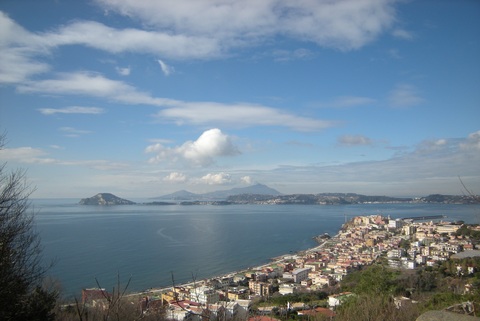


The Archaeological Park of Cumae is considered among the world's most fascinating sites as it intertwines history, myth and legend. Legendary is the founding of the colony itself with its original inhabitants having followed the flight of a dove from the island of Euboea guided by the God Apollo. Cumae was the first of the Greek colonies in the Western mainland, founded in the second half of the 8th century BC. The Greeks placed the temples of Jupiter and Apollo on two terraces of the Acropolis connecting them by the "via sacra". The latter, according to mythology, is linked to Daedalus, the mythical inventor to whom they assigned the most daring and complex creations and who fled from Crete with wings of wax to Italy with his son Icarus, arriving in Cumae, where he built a "Grand Temple". The Cumans founded Parthenope on the Hill of Pizzofalcone in Naples and granted to refugees of the island of Samos to settle in Pozzuoli (Dicearchìa). The construction of the fortress-ports at Miseno, Pozzuoli, Naples and Capri allowed the Cumans effective control of the territory.
The expansion of Cumae led to an inevitable clash with the Etruscans in 524 and 474 BC. These battles took care permanently of the Etruscan danger but marked the beginning of a period of internal political turmoil. Cumae was conquered by the Samnites in 421 BC but there is little evidence of this occupation as cults and customs continued to be Greek.
With the Roman occupation of Campania, Cumae acquired in 338 BC the "civitas sine suffragio", the right to citizenship without vote, having remained faithful to Rome during the Punic wars against Hannibal and was rewarded with the "civitas optimo iure" thus becoming "municipium". In the 2nd century a.d. Cumae reached its greatest urban expansion with the construction of major public buildings in the plain below the Acropolis where there are remains of Roman and Samnite period, mostly concentrated in the area of the Forum, currently under excavation. Reduced to a small town nestled atop the Acropolis, between the fourth and fifth century d.c. Cumae, with Puteoli and Neapolis, was one of the most flourishing Christian communities of Campania. During this time the temples of Jupiter and Apollo were transformed into churches and burial grounds that are still observable today. In 542 Cumae was occupied by the Ostrogoths who held it until 553 when, after a year of siege, was reconquered by the Byzantines under the leadership of General Narses. In 717 it fell to the Longobards and was devastated by the Saracens in 915 becoming a haven for pirates and marauders until, in 1207, it was finally destroyed by the army.
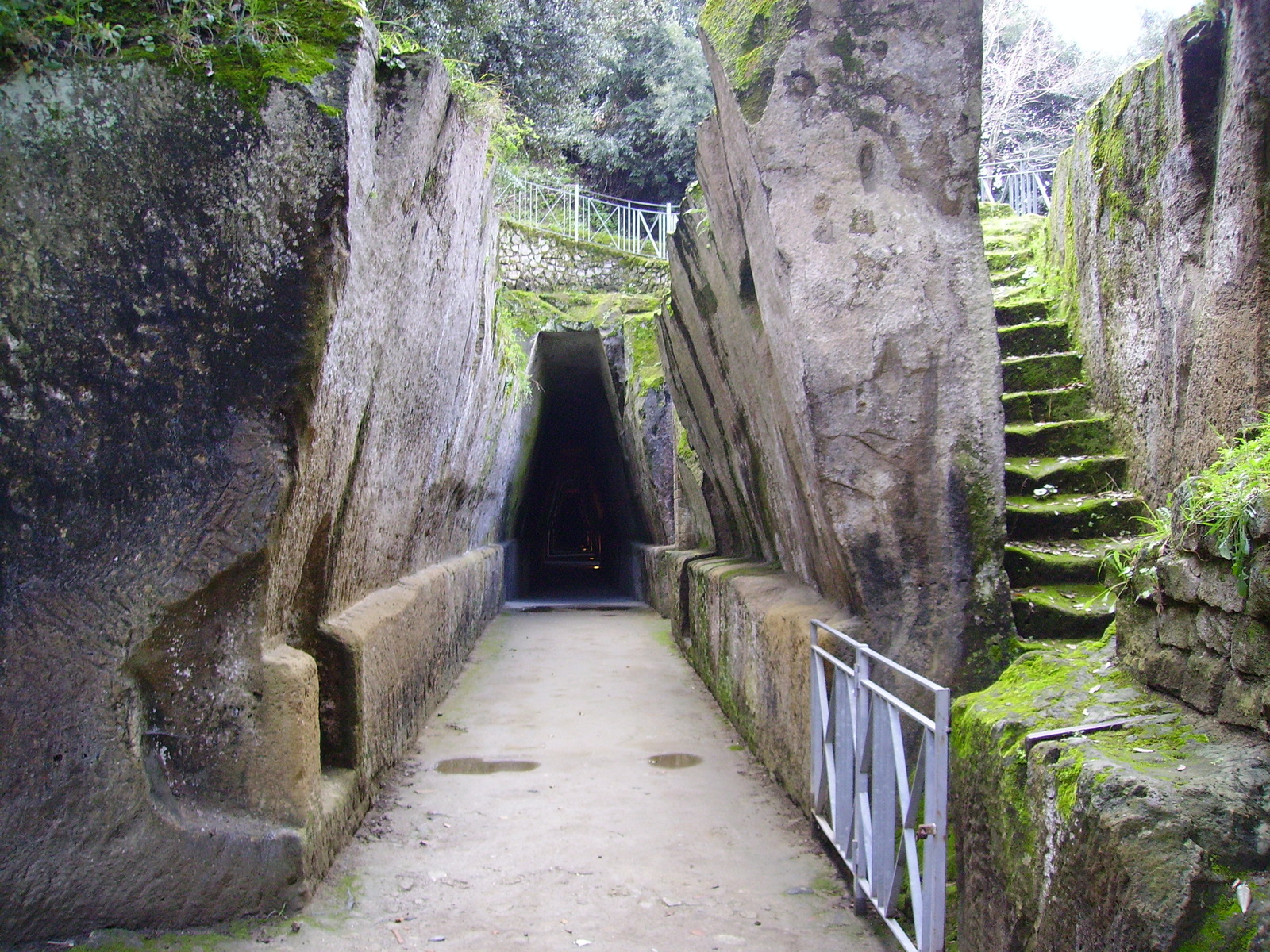
It is in this magical place where we find Sibyl's Grotto, a tunnel of Graeco-Roman time excavated in the Tufa stone between the fourth and third century BC where, according to legend, resided the Cumaean Sibyl, priestess of Apollo renowned for its oracles, mentioned in Book VI of Virgil's Aeneid. Here died Tarquinius Superbus, the last King of Rome.
The findings of the archaeological site of Cuma are kept in the archaeological museum in Naples and in the archaeological museum of present within the aragonese Castle of Baia.
The expansion of Cumae led to an inevitable clash with the Etruscans in 524 and 474 BC. These battles took care permanently of the Etruscan danger but marked the beginning of a period of internal political turmoil. Cumae was conquered by the Samnites in 421 BC but there is little evidence of this occupation as cults and customs continued to be Greek.
With the Roman occupation of Campania, Cumae acquired in 338 BC the "civitas sine suffragio", the right to citizenship without vote, having remained faithful to Rome during the Punic wars against Hannibal and was rewarded with the "civitas optimo iure" thus becoming "municipium". In the 2nd century a.d. Cumae reached its greatest urban expansion with the construction of major public buildings in the plain below the Acropolis where there are remains of Roman and Samnite period, mostly concentrated in the area of the Forum, currently under excavation. Reduced to a small town nestled atop the Acropolis, between the fourth and fifth century d.c. Cumae, with Puteoli and Neapolis, was one of the most flourishing Christian communities of Campania. During this time the temples of Jupiter and Apollo were transformed into churches and burial grounds that are still observable today. In 542 Cumae was occupied by the Ostrogoths who held it until 553 when, after a year of siege, was reconquered by the Byzantines under the leadership of General Narses. In 717 it fell to the Longobards and was devastated by the Saracens in 915 becoming a haven for pirates and marauders until, in 1207, it was finally destroyed by the army.
It is in this magical place where we find Sibyl's Grotto, a tunnel of Graeco-Roman time excavated in the Tufa stone between the fourth and third century BC where, according to legend, resided the Cumaean Sibyl, priestess of Apollo renowned for its oracles, mentioned in Book VI of Virgil's Aeneid. Here died Tarquinius Superbus, the last King of Rome.
The findings of the archaeological site of Cuma are kept in the archaeological museum in Naples and in the archaeological museum of present within the aragonese Castle of Baia.