
Argyle Place Park
Between Argyle Street and Argyle Place there is a small, triangular park at what was once the Millers Point tram terminus. It is the city’s only Village Green.
At the eastern end is an ornate sandstone drinking fountain inscribed “Walter Renny Mayor 1869”.
Argyle Place Park takes its name from the county of Argyll, the home county of Governor Lachlan Macquarie.
Argyle Cut, which provided better access between The Rocks and Millers Point was commenced in 1843. With the completion of Argyle Cut in 1859 the four main principal streets in Millers Point, Argyle, Kent, Windmill and Fort Streets formed the nucleus of the village with the centre being the park reserve of Argyle Place. In the 1860s the City Council undertook major civic works in Observatory Park, completing terracing, steps and retaining walls in 1866. Argyle Place was dedicated as a reserve for public recreation in 1867. A dwarf wall was built around the reserve in 1868 . It is believed that Argyle Place was landscaped and planted by the Double Bay nurseryman and landscape gardener Michael Guilfoyle.
There is a similar inscription on a pair of sandstone gateposts at the Bridge Street entrance to Macquarie Place Park.
Brother Walter Renny was foundation Treasurer of the Unity Lodge of Sydney No. 1169, English constitution, at its inauguration on 27 December 1866.
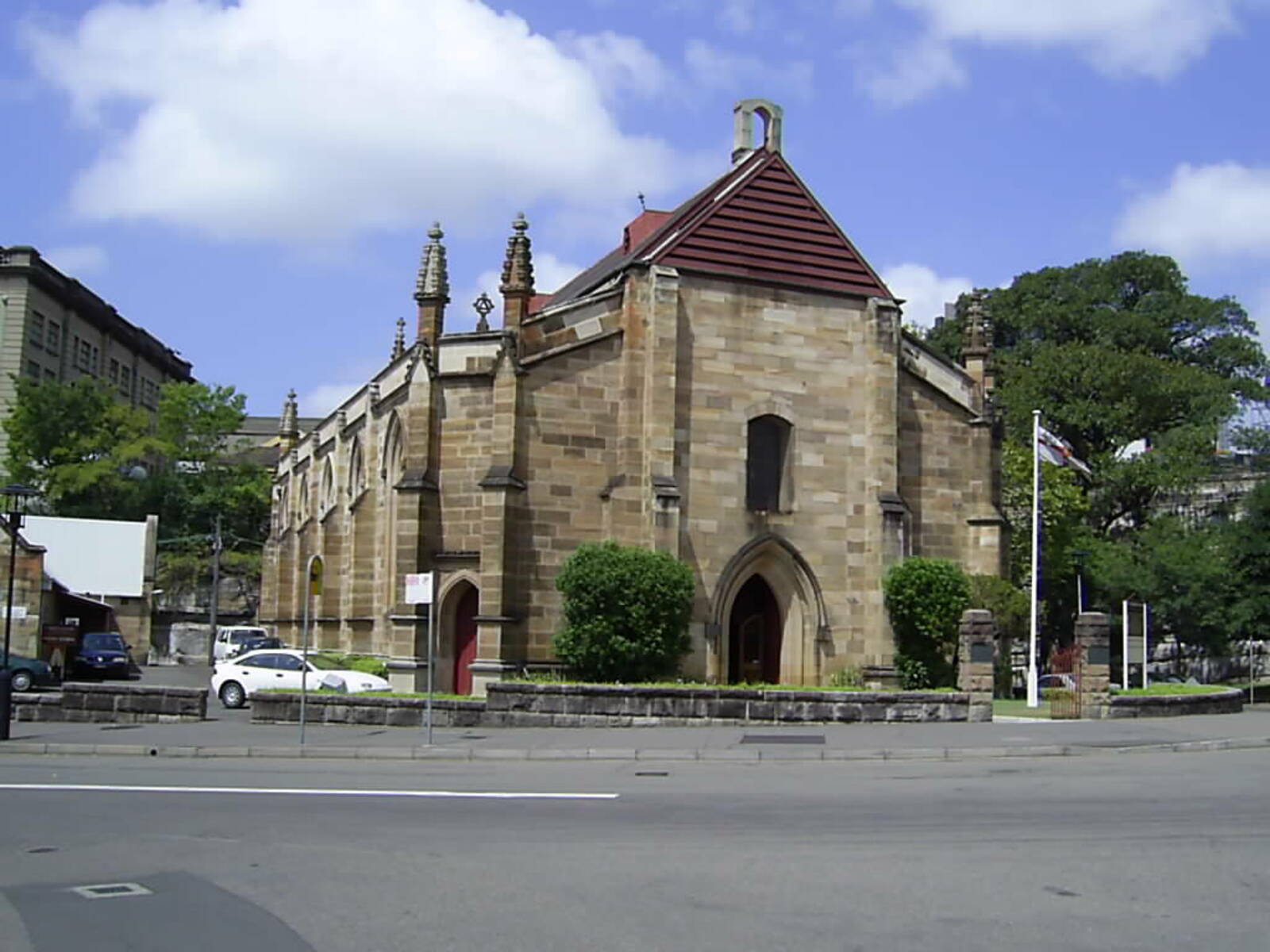
Opposite the fountain is the Holy Trinity Church, known as the Garrison Church since the 1840s, when the 50th Queen’s Own Regiment attended morning service. From 1763 to 1830, the regiment had held a warrant No. 112 from the Grand Lodge of Ireland.
Brother Robert Campbell, the first Provincial Grand Master of the Scottish Constitution for New South Wales, was a member of the church building committee.
Next to the church is a sandstone hall which was the school where Brother Sir Edmund Barton, Australia's first Prime Minister, attended.
In the surrounding streets, Brother William Bede Dalley and Brother Sir George Read, Australia's fourth Prime Minister spent their childhood.
Between Argyle Street and Argyle Place there is a small, triangular park at what was once the Millers Point tram terminus. It is the city’s only Village Green.
At the eastern end is an ornate sandstone drinking fountain inscribed “Walter Renny Mayor 1869”.
Argyle Place Park takes its name from the county of Argyll, the home county of Governor Lachlan Macquarie.
Argyle Cut, which provided better access between The Rocks and Millers Point was commenced in 1843. With the completion of Argyle Cut in 1859 the four main principal streets in Millers Point, Argyle, Kent, Windmill and Fort Streets formed the nucleus of the village with the centre being the park reserve of Argyle Place. In the 1860s the City Council undertook major civic works in Observatory Park, completing terracing, steps and retaining walls in 1866. Argyle Place was dedicated as a reserve for public recreation in 1867. A dwarf wall was built around the reserve in 1868 . It is believed that Argyle Place was landscaped and planted by the Double Bay nurseryman and landscape gardener Michael Guilfoyle.
There is a similar inscription on a pair of sandstone gateposts at the Bridge Street entrance to Macquarie Place Park.
Brother Walter Renny was foundation Treasurer of the Unity Lodge of Sydney No. 1169, English constitution, at its inauguration on 27 December 1866.
Opposite the fountain is the Holy Trinity Church, known as the Garrison Church since the 1840s, when the 50th Queen’s Own Regiment attended morning service. From 1763 to 1830, the regiment had held a warrant No. 112 from the Grand Lodge of Ireland.
Brother Robert Campbell, the first Provincial Grand Master of the Scottish Constitution for New South Wales, was a member of the church building committee.
Next to the church is a sandstone hall which was the school where Brother Sir Edmund Barton, Australia's first Prime Minister, attended.
In the surrounding streets, Brother William Bede Dalley and Brother Sir George Read, Australia's fourth Prime Minister spent their childhood.