The history of German migration to the Russian Empire begins in 1763. Back then Empress Catherine II invited Germans to settle in vast new territories of the empire. Her successor Alexander I issued another decree in 1804, by which the new colonists were required to have wives and children and to be either winemakers or silk producers.
Following this initiative German migrants began to move to Georgia and the first colonies were established in 1818-1819: Elisabethtal (Asureti), Marienfeld and Petersdorf (both now parts of Sartichala), New-Tiflis (part of David Aghmashenebeli Avenue), Alexanderdorf (Akaki Tsereteli Avenue in Tbilisi) and Katarinfeld (Bolnisi). Later, more and more Germans came in and by the 1940s some 20,000 Germans lived in 20 different towns of Georgia.
Almost all Germans save those who were married to non-Germans were deported to Central Asia in 1941-1942 and Georgians from other parts of the country were moved to the German settlements. Germans in those years were not popular among the new settlers and it is not surprising, unfortunately, that as time passed, almost none of those deported came back. Those who stayed either assimilated or moved away.
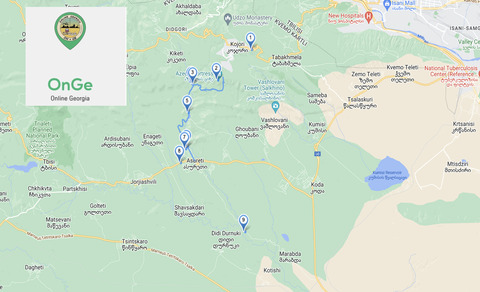
Asureti, which is located at the foothills of the Kojori Ridge, managed to retain its German heritage more than any other settlement in this part of Georgia. Several houses with characteristic German architecture and an 1871 Evangelical Lutheran Church restored in 2020, are the key highlights. Vineyards are still an important landmark for the village, especially noted for the famous type of wine called “Shala”, grown by a local German farmer Shalma and named in his honor.
Another place that is worth a visit is the German cemetery. Curiously enough, it has been kept intact. The gravestones reveal the names of former dwellers of the village - who they were and what their occupation was, when they were born and when they died. Curiously enough, it was Elisabethtal from where the German ancestors of Nadezhda Alliluyeva, the wife of Josef Stalin, came from.
For tea-time reading click here https://jam-news.net/my-german-house/


Click to see all 5 Photos
Story 4 years ago
Asureti – the first German colony in Georgia

OnGe
en
Overview
Reviews 0
Reviews
0.0
0 comments
Provided by
OnGe
This story belongs to

4.0
TBS - Betania - Asureti Loop Tour (140 km RT)

4.0
Georgia Guidebook
4.0