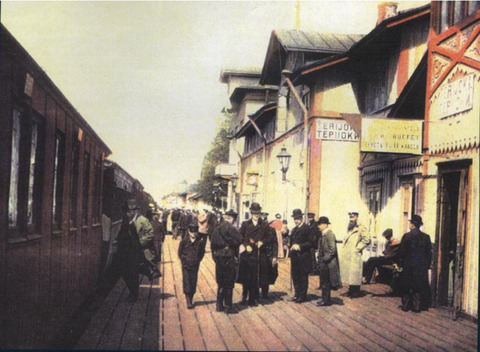


The Finnish name of the settlement called Beloostrov, or the White Island in Russian, is Valkeasaaren. The village had been called this way since the 17th century. In the 19th century, both names were in use. When the Finland railroad began operating in 1870, Beloostrov became the border station between the Russian Empire and the Grand Duchy of Finland that had all the markings of an independent state despite officially being a part of Russia. The Russian customs office was located in Beloostrov, while the Finnish one was on the opposite bank of the Sestra river.
In 1920s, Beloostrov was renamed to Krasnoostrov, that is, Red Island, but the new name did not stick. In 1928, the construction of the Karelian Fortified Region began on the Russian-Finnish border between Sestroretsk and Lake Ladoga. Its length was 80 kilometers, its depth varied between 2 and 5 kilometers. Karelian Fortified Region was a part of the so-called Stalin Line that ran from the Karelian Isthmus to the shores of the Black Sea. Karelian Fortified Region consisted of two hundred permanent defensive installations. The biggest one of them, twin-gun caponier called 'Millionaire', was in Beloostrov. Currently, there is a memorial plaque to be found among its ruins.
In 1934, a large railway station was built in Beloostrov. It featured the Constructivist style and was decorated with the emblems of the USSR and bas-reliefs devoted to the scenes of socialist building.
During the Second World War, in September 1941, Finnish troops approached Beloostrov. This was the site of ferocious battles that continued for a few months. The station changed hands a few times, but the situation stabilized by winter, and only faint positional crossfire was taking place from time to time up until June 1944.
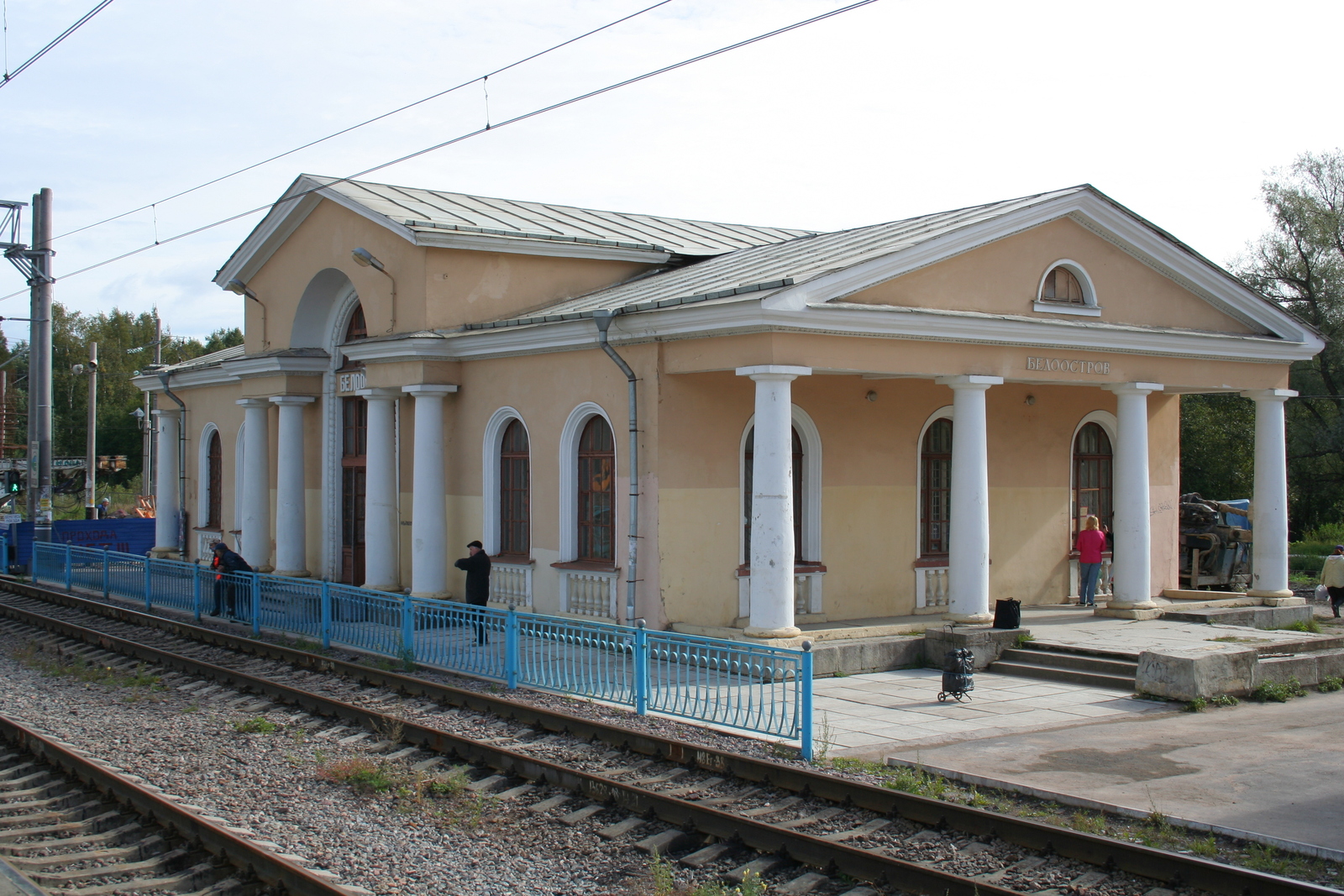
Nevertheless, the Beloostrov railway station was levelled to the ground during the war. The new building was erected in 1955 and turned out to be much simpler.
We leave Beloostrov behind and cross the Sestra river that used to be the borderline over a railroad bridge. When Beloostrov station came into being, on the opposite side of the river, Finnish customs station called Rayala began operating. Rayala means 'Borderline' in Finnish. Later it was renamed to Rajajoki, which means 'the borderline river', the Finnish name for the Sestra river. The building of the Finnish station was as well designed by Bruno Granholm. Only several parts of its foundation remained untouched. They can be seen to the left of the train, some 500 meters away from the bridge crossing the Sestra river.
Having passed the ruins of Rayaoki station, our train travels under the road junction of the Western High-Speed Diameter that becomes the Scandinavia highway after Beloostrov and connects Saint Petersburg and Finland.