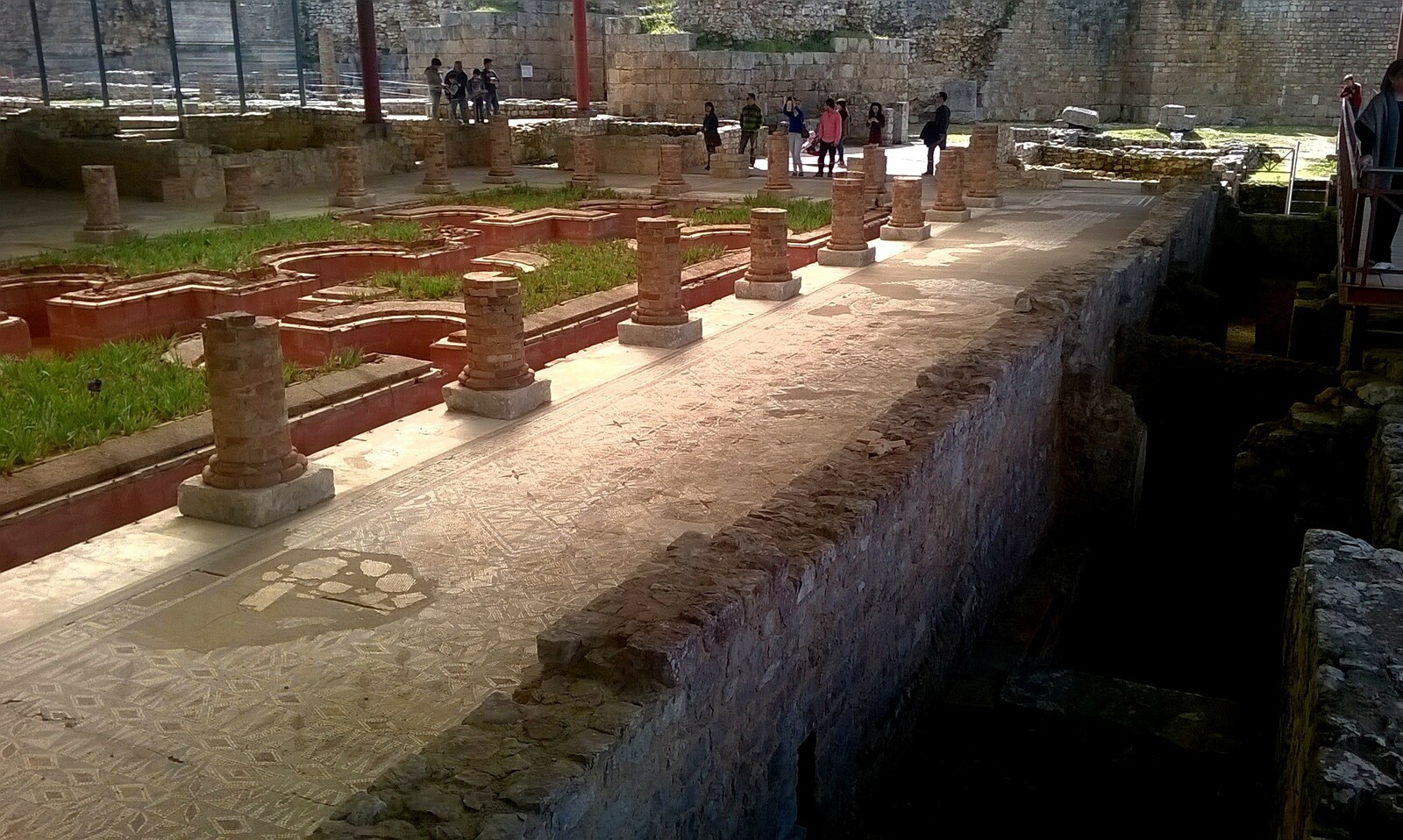
Conímbriga Ruins is a Roman archaeological site located in Condeixa-a-Nova, about 16 kilometers from Coimbra. It is one of the largest and best-preserved Roman settlements in the Iberian Peninsula, and is classified as a Portuguese National Monument.
Cónia or Cónio was founded by the Celts in the 2nd century BC and was conquered by the Romans in the 1st century AD. When was renamed to Conímbriga. It quickly became a prosperous city, serving as a major trade center on the Roman road network. Conímbriga was home to a population of around 10,000 people, and had all the amenities of a typical Roman city, including a forum, temples, baths, an amphitheater, and a necropolis.
At the 5th century AD, the Suevi arrived. The relationship between the Suevi and the local population was complex. While there was conflict, there was also some degree of integration. Nonetheless, the Suevi's raids and pillaging caused widespread devastation and it was gradually abandoned.
These events played a significant role in the history of Coimbra. Coimbra was a much smaller and peripheral, called Emínio, at that time. And, Dioceses, were not only centers of religious authority, but also of political and administrative power. The Suevi's arrival led to the fortification of Emínio to protect it from attack. The bishop of Conímbriga moved to Emínio, together with the Episcopal Curia and bringing the local population. That was when the place called Emínio changed its name to Coimbra and began to represent greater political relevance.
It was not until the 19th century that Conímbriga was rediscovered, and archaeological excavations began. Guided tours are available in several languages and Conímbriga also has a small museum that houses a collection of artifacts found during the excavations. These artifacts include mosaics, statues, pottery, and coins.
For family travelers, it's a beautiful place to spend a morning or afternoon. And during the visit, make a brief stop and rest. There is a small cafe on site to buy drinks and snacks and also wooded spaces with picnic tables separated from the archaeological area, which has some uneven levels and may require more attention with young children.
