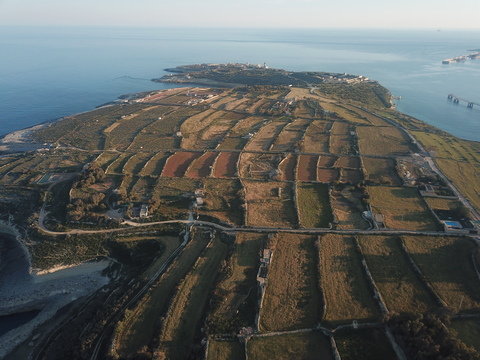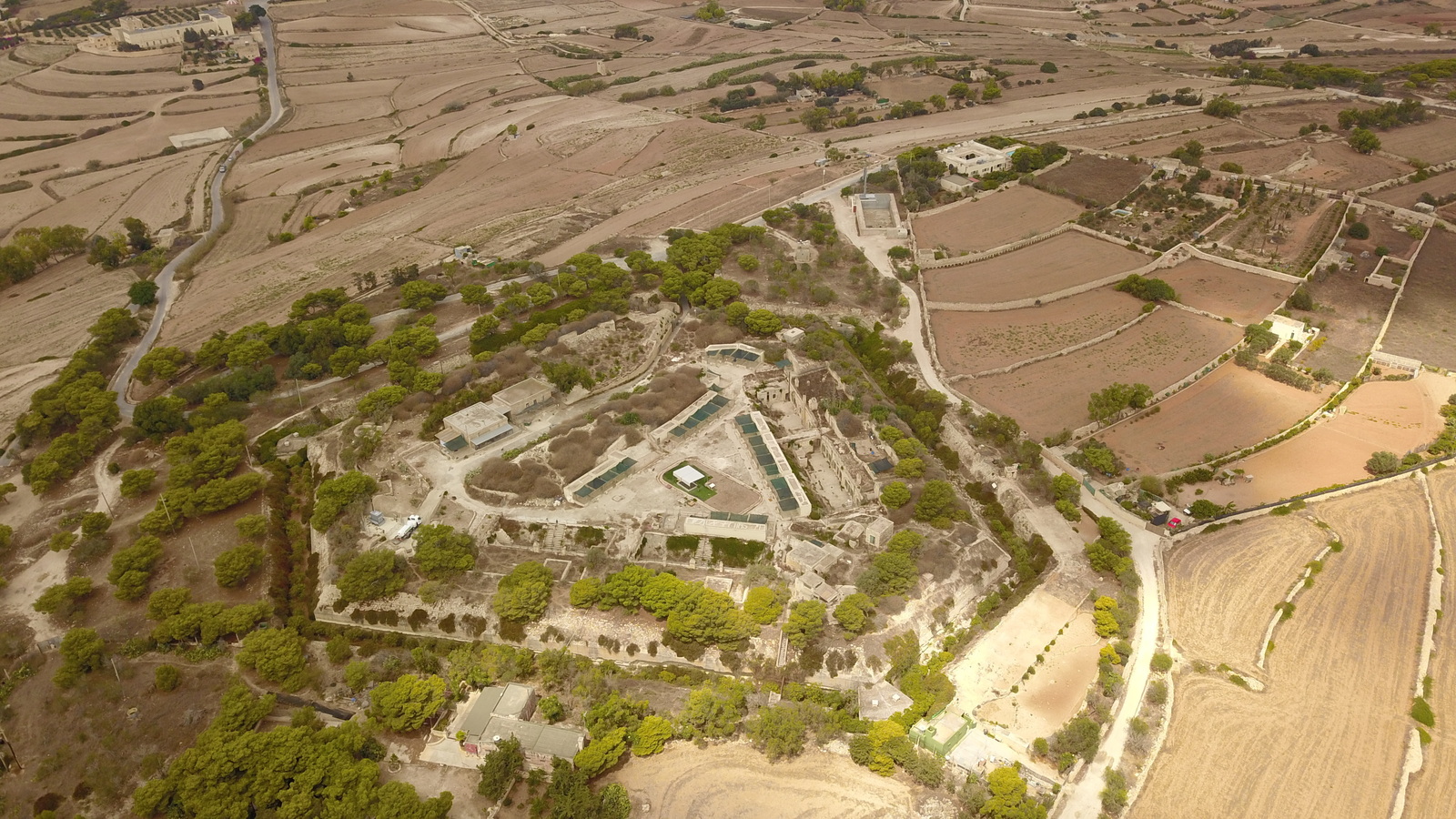


Fort tas-Silg is a British era polygonal fort built between 1879 and 1883, on high ground above il-Ħofra-iż-Żgħira, a nearby inlet. Its primary function was as a fire control point, controlling the massed guns of Fortress Delimara, at the furthest point of the Peninsula guarding the harbour entrance.The first stone of Fort Tas-Silġ was laid down in 1879 by British Royal military engineers, and it was completed in 1883. The fort is a classic example of a polygonal fort with underground barracks, magazines and a parade ground. The fort is surrounded by a ditch, and the entrance was protected with gun ports on one side and a bridge leading to the door.
During the both World War the Fort served as a garrison, and in the latter radar technology was in its infancy, in Malta, where the British authorities decided to build an early-warning system. In Mid-July of 1940, the third Air Ministry Experimental Station No. 501 AMES at Tas-Silġ was installed, as a part of a chain of four radar system round the island, directing fighter squadrons and anti-air Bofors guns.
In the 1950s, the Fort was used as ammo depot by the RAF, later increasing its purpose for wireless communication, installing three advanced aerials on the camp
The fort was finally decommissioned, and handed to civilian authorities in 1960. Since 1991, the fort has been leased to the Island Sanctuary as a refuge for abandoned canines.