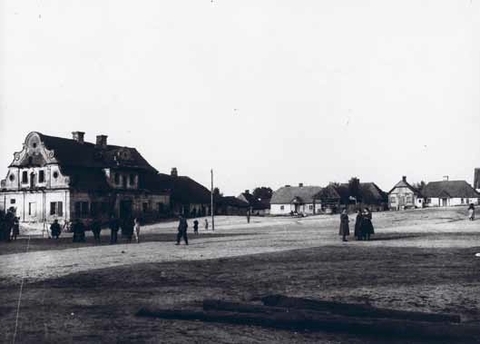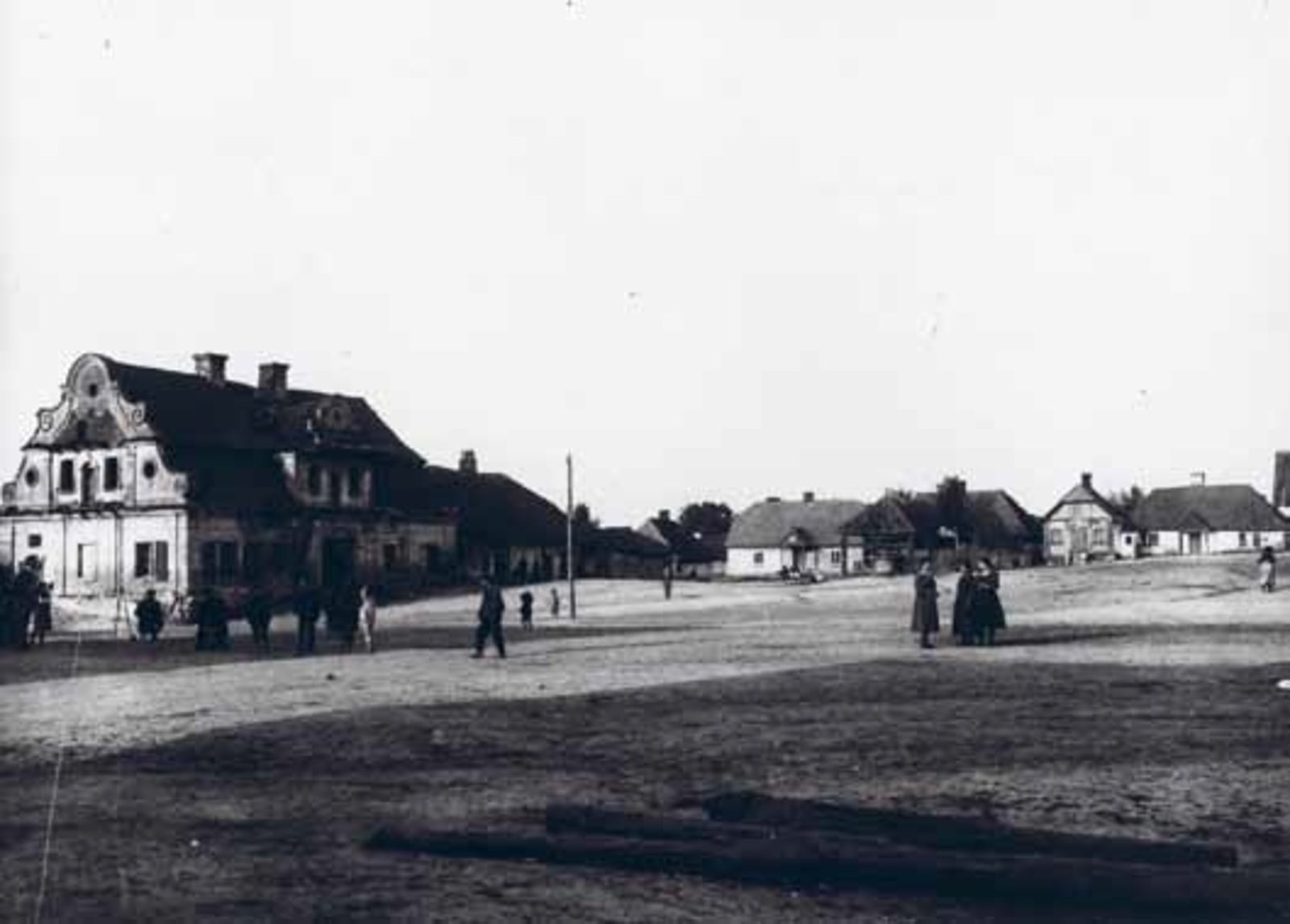


The town of Głusk was founded in 1688 by Tomasz Kazimierz of Drzewice Głuski on the strength of a privilege from King John III Sobieski. In the 16th-18th centuries. The city was located on the territory of the village of Abramowice, which belonged to the key of the vast domain. Despite its favorable location on an important trade route leading from Lublin to Rawa Ruska, endowed with a royal privilege for two fairs a week and four fairs a year, it never developed economically and remained a local trade and artisan center. Its residents made a living from shoemaking, tailoring, furriers, coopers, carpenters, beer making, small-scale trade and agriculture. Since the 1820s. The rank of Glusk as the administrative center of the estate and the seat of the estate's owners gradually declined.The development of the town was also not favored by its close proximity to large, well-developing towns. Devastated by fires and depopulated by epidemics, and located off the newly built Lublin-Piaski road, Glusk was in decline.In 1869. lost its municipal rights.From 1870 to 1954 it was the seat of the municipality of Zemborzyce. In 1928. a public school building was put into use, which was founded by Henryk Sachs, the owner of the manor in Abramowice.There was also a steam mill.In 1989. Glusk was administratively incorporated into Lublin and became a district of the city, but remained the seat of the municipality.
Jews in Glusk - Until 1918. - The first Jews probably appeared here in 1638., i.e. Even before the location of the city, while in 1689. were granted a privilege to establish an independent religious community, as well as to build a synagogue. In the late 17th and early 18th centuries. a cemetery was delineated.Despite the difficult economic conditions, the local community grew demographically - in 1765. 64 Jewish families were already living here. The abandoned town hall housed an inn run by Jews until World War I.In the 19th century. A synagogue, a communal beit ha-midrash (erected around 1822) and a mikveh were in operation. In the 1880s. The community was headed by Rabbi Shalom Tzvi Goldbaum. At the end of the 19th century. The Jewish quarter, including the kahal buildings, burned down; however, a new brick synagogue was erected early in the 20th century.
Interwar period - Under the management of the local community were a synagogue, a wooden beit ha-midrash, in the building of which there was also a rabbi's apartment, a kosher slaughterhouse, a wooden mikvah and an apartment for the shochetim. In 1934. Rabbi Symcha Binem Shafirsztejn founded a new brick, tin-roofed building for the community mikvah.
Holocaust - The ghetto in Glusk was established in 1941. In addition to the residents of the settlement, the Germans placed 65 Jews from Szczecin in the ghetto.During the first deportation (October 16, 1942), most of the Jews from Glusk were relocated to the ghetto in Piaski. From there, along with the residents of the local ghetto, they were taken to the Sobibor death camp. In November 1942. The 30 highly skilled Jewish craftsmen remaining in the ghetto were sent by the Germans to the Majdanek concentration camp.