
The small island of Loreto, north of Monte Isola, has been inhabited for many centuries. Some finds, perhaps of Roman origin, and many coins dating between 1100 and 1781 document the continuity of the settlement on the island.
At the same time as the Franciscan settlement on the Island of San Paolo, at the end of the 15th century Loreto became the property of the sisters of S. Chiara, who allegedly settled in the monastery founded in the 13th century by Bertrada Oldofredi.
In 1575 Carlo Borromeo ordered the closure of the complex. The abandonment of the island determined its rapid decline, so much so that in the apostolic visit of 1578 a small church without furnishings is described on the island, poorly maintained by a hermit: Fra' Agricano. In 1696 Vincenzo Coronelli described it as the property of the heirs of Count Alessandro Martinengo and noted: "There are only a few rooms, a church and a hermitage in ruins". The islet remained for a long time an abandoned place where only fishermen stopped.
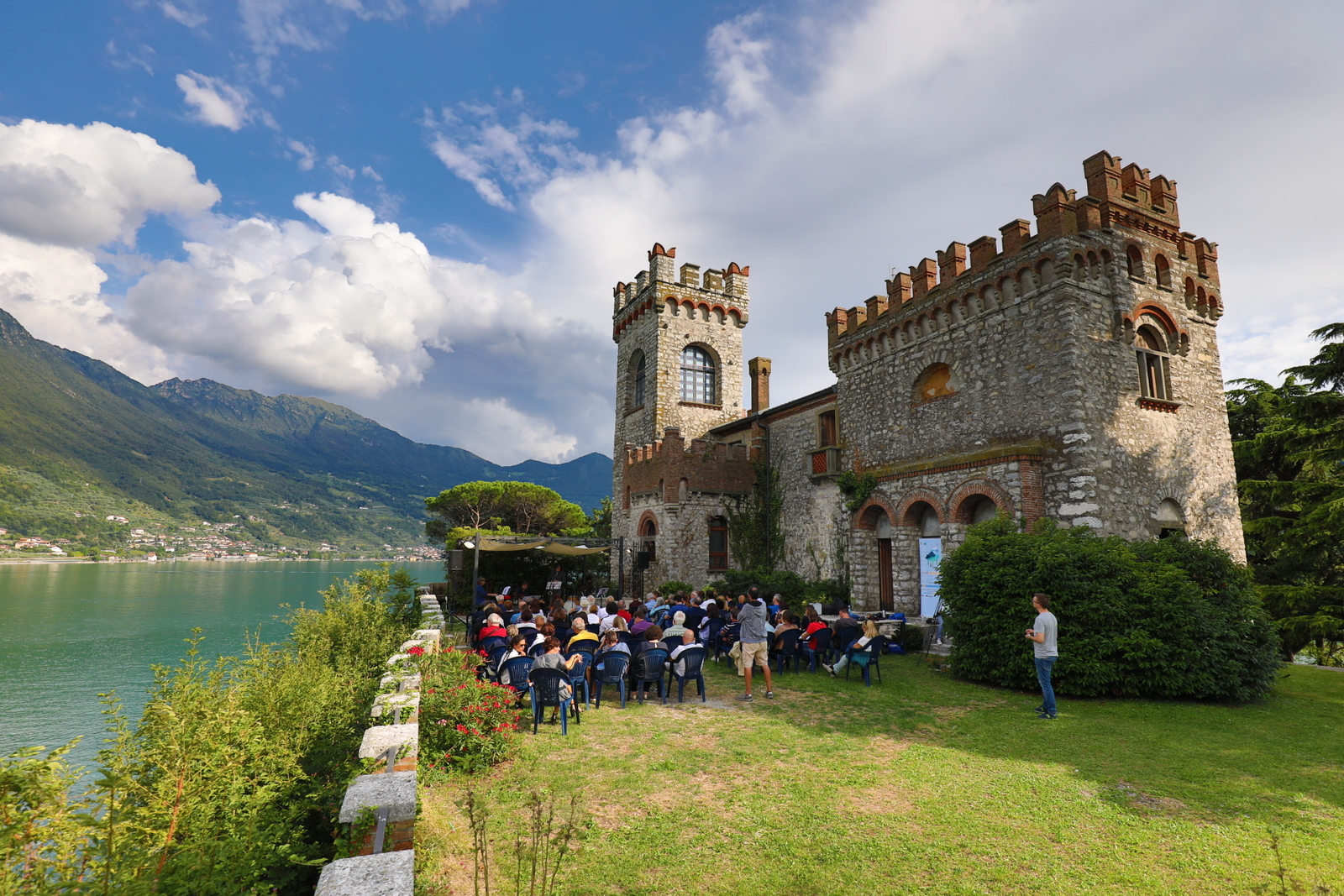
There were many changes of ownership until the Venetian duchess Felicita Bevilacqua left the island to the Opera Pia Asilo Bevilacqua of Verona, who sold it in October 1900 to the captain of the navy Vincenzo Richieri from Sale Marasino. On the existing remains, the buyer asked the architect Luigi Tombola to build today's villa, trying to recreate a small castle in a predominantly neo-romantic style, made even more fascinating and mysterious by the thick vegetation of pines, cedars and exotic plants.
From a small harbour with two turrets at the corners, one of which functions as a lighthouse, it is possible to go up to the villa, which has a rectangular plan with two floors. The villa has a very suggestive appearance thanks to the turret, the battlements, the light stone walls and a perspective view that can be enjoyed from the outside, given that it stands on a rock overlooking the lake emerging from the luxuriant garden.
Despite its small size, it is undeniable that the island of Loreto is a place of great seduction, which throughout its history has inspired artists and poets, such as the writer Costanzo Ferrari who chose it for the setting of some passages of his historical novel "Tiburga Oldofredi", published in 1850, which well witnesses the romantic charm of the ruins.
Today the island continues to make a fine show of itself with the castle, crenelated towers and walls, and over time it has become the most famous symbol of Lake Iseo.