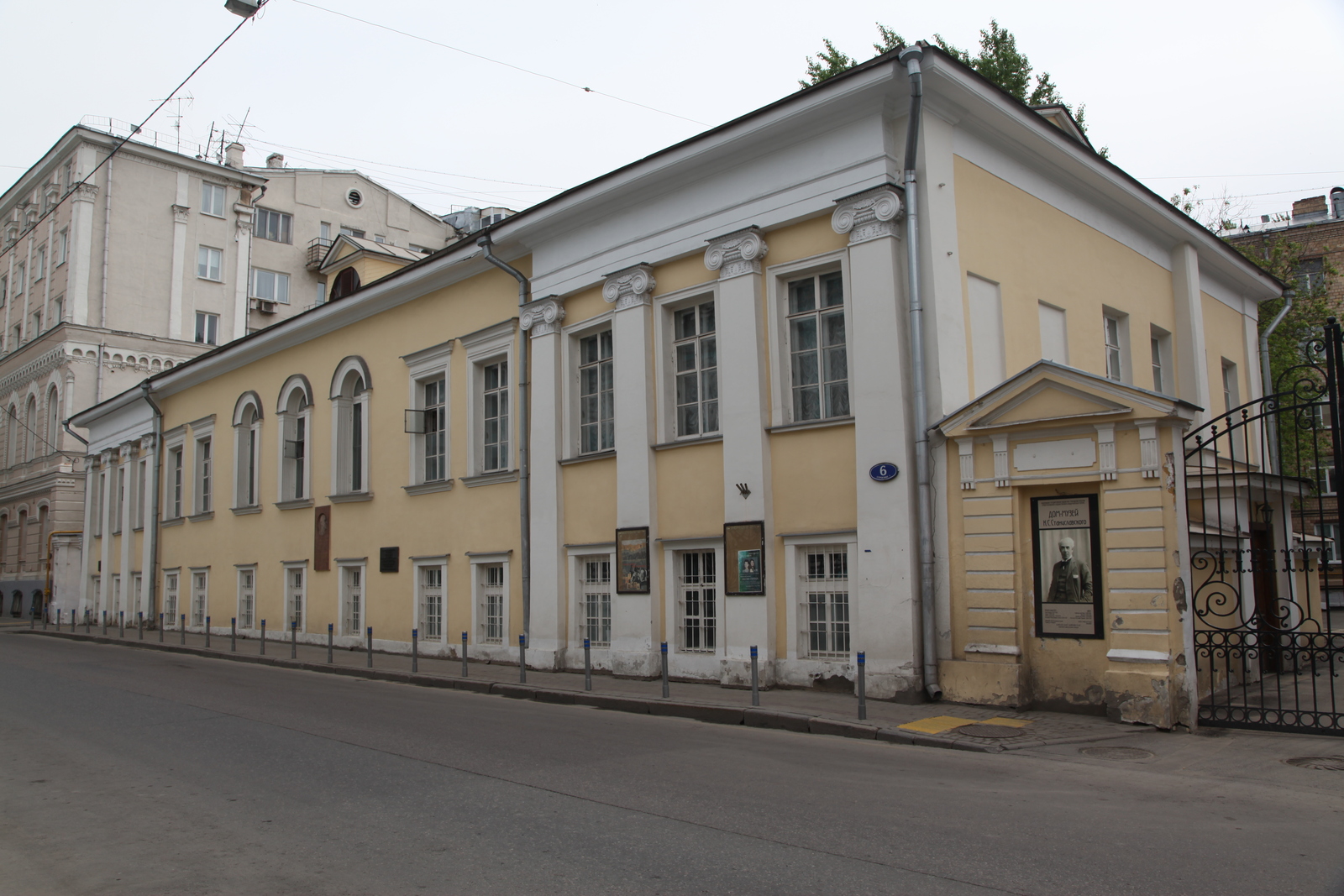


Museum of Stanislavski (Leontyevsky pereulok, Building No. 6)
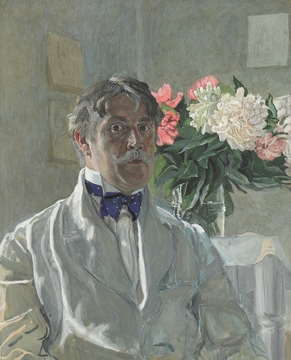
When talking about those close to Golovin, it would be impossible not to mention Constantin Stanislavski, with whom he worked extensively during the second half of 1920s. Both were born in Moscow on exactly the same day. Both graduated from the Polivanovskaya Gymnasium, and their aesthetic views were developed in the 1880s under the influence of the ebullient atmosphere of the Mamontov circle. They also began their efforts to reform the theater at the same time.
In 1925, they met again in Odessa and became good friends, and upon their return, began their great joint production of the comedy by Pierre Beaumarchais, "The Mad Day or The Marriage of Figaro." The director wanted to create a merry, upbeat show with music, singing, and dancing, which sparkled and "foamed like champagne." Golovin's painting style, in his opinion, was very well suited to this purpose, and he was right: the show was an incredible success and remained in the repertory for more than thirty years.
The production was a huge challenge for the artist: Golovin corresponded exclusively with the director, since Golovin and Stanislavski were in different cities. Eventually, however, the production was a huge success. The memory of this triumph is preserved in letters. On new year’s eve, 1927, Golovin received a telegram with the following message:
"I send warm New Years greetings to our favorite genius on behalf of myself and the whole theater. May there be new dazzling creations in the new year. Did you hear our applause at Detskoye selo? The costumes turned out to be first rate. Stanislavski.
December 31, 1926."
Their next joint production was to be William Shakespeare's tragedy "Othello" but, this time, Stanislavski disliked Golovin's sketches. The artist and director disagreed about the plays’ genre. Preparations for this production proceeded less smoothly: Stanislavski prepared a production plan in Nice, and Golovin drew sketches in Detskoye selo, when he lived during his long periods of serious illness towards the end of his life. Neither Golovin nor Stanislavski saw what was finally staged and, after only ten performances, the play was dropped from the repertoire. It was the last work that the artist completed for the theater: he died a month after the premiere of "Othello."
During his years of collaboration with Golovin, Stanislavski, together with his wife, the Moscow Art Theatre actress, Mariya Lilina, lived in Moscow in Building No. 17, Leontyevsky pereulok. It was built in the early twentieth century in the early Russian empire style on the foundations of a white stone official building dating to the 17th-18th centuries that had burnt down during the Napoleonic invasion.
The exhibition includes the living quarters of Stanislavski and his wife, the "Onegin hall", the "Blue foyer" and other rooms. Here, you can also see theater props and costumes that were made based on the sketches of Golovin: for example, the banquette, chairs, lights and costumes created the play "The Mad Day, or The Marriage of Figaro."
When talking about those close to Golovin, it would be impossible not to mention Constantin Stanislavski, with whom he worked extensively during the second half of 1920s. Both were born in Moscow on exactly the same day. Both graduated from the Polivanovskaya Gymnasium, and their aesthetic views were developed in the 1880s under the influence of the ebullient atmosphere of the Mamontov circle. They also began their efforts to reform the theater at the same time.
In 1925, they met again in Odessa and became good friends, and upon their return, began their great joint production of the comedy by Pierre Beaumarchais, "The Mad Day or The Marriage of Figaro." The director wanted to create a merry, upbeat show with music, singing, and dancing, which sparkled and "foamed like champagne." Golovin's painting style, in his opinion, was very well suited to this purpose, and he was right: the show was an incredible success and remained in the repertory for more than thirty years.
The production was a huge challenge for the artist: Golovin corresponded exclusively with the director, since Golovin and Stanislavski were in different cities. Eventually, however, the production was a huge success. The memory of this triumph is preserved in letters. On new year’s eve, 1927, Golovin received a telegram with the following message:
"I send warm New Years greetings to our favorite genius on behalf of myself and the whole theater. May there be new dazzling creations in the new year. Did you hear our applause at Detskoye selo? The costumes turned out to be first rate. Stanislavski.
December 31, 1926."
Their next joint production was to be William Shakespeare's tragedy "Othello" but, this time, Stanislavski disliked Golovin's sketches. The artist and director disagreed about the plays’ genre. Preparations for this production proceeded less smoothly: Stanislavski prepared a production plan in Nice, and Golovin drew sketches in Detskoye selo, when he lived during his long periods of serious illness towards the end of his life. Neither Golovin nor Stanislavski saw what was finally staged and, after only ten performances, the play was dropped from the repertoire. It was the last work that the artist completed for the theater: he died a month after the premiere of "Othello."
During his years of collaboration with Golovin, Stanislavski, together with his wife, the Moscow Art Theatre actress, Mariya Lilina, lived in Moscow in Building No. 17, Leontyevsky pereulok. It was built in the early twentieth century in the early Russian empire style on the foundations of a white stone official building dating to the 17th-18th centuries that had burnt down during the Napoleonic invasion.
The exhibition includes the living quarters of Stanislavski and his wife, the "Onegin hall", the "Blue foyer" and other rooms. Here, you can also see theater props and costumes that were made based on the sketches of Golovin: for example, the banquette, chairs, lights and costumes created the play "The Mad Day, or The Marriage of Figaro."