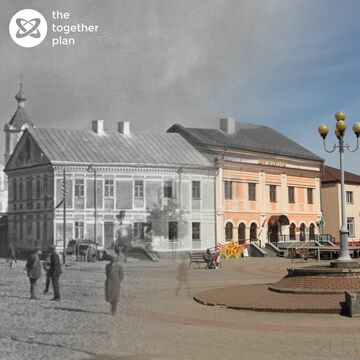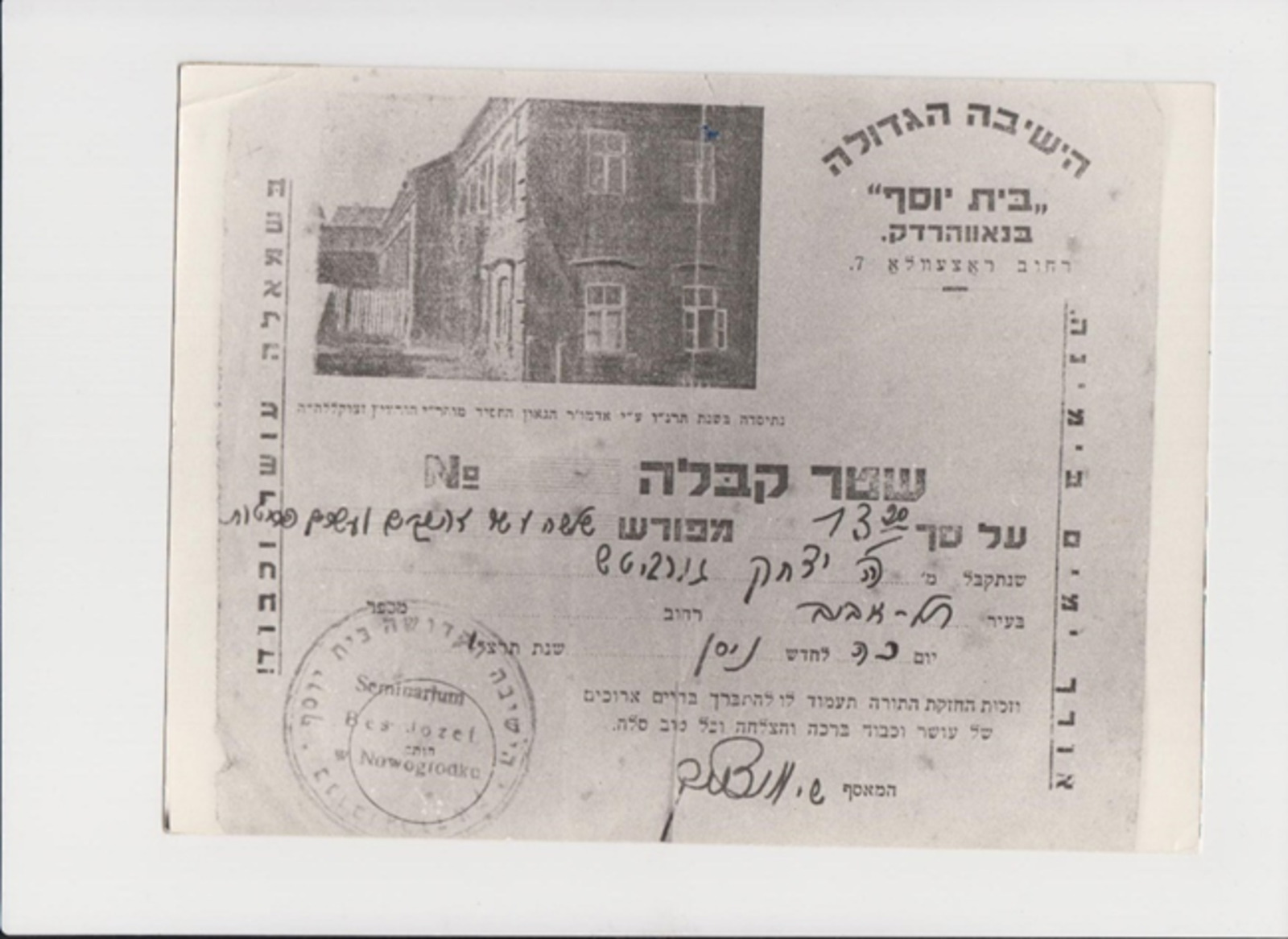


The yeshiva was established by Reb Yosef Yuzl Gurwitz (Horowitz) in 1896. The yeshiva belonged to the new Mussar movement, which can be summed up as 'ethics, morals and religious behavior'. Unlike the Litvaks and Hasidim, the doctrine of Mussar is centered on man and his self-actualization.
Many residents of Novogrudok were tolerant of Reb Gurvitz, putting aside tradition in order for him to develop a novel methodology of worship for a new generation. But quite a large contingent of the Novogrudok population did not agree with the eccentricity of the Rebbe's behavior, of which asceticism was a feature, and from time to time quietly protested against the "Mussar epidemic".
The yeshiva saw its heyday in the years before WWI, when the number of students from different countries numbered around 400.
In 1939, when the Soviets established their rule in the region, the yeshiva was closed and the students moved to Lithuania. Some managed to obtain a visa from the Japanese consul Senpo Sugihara in Kaunas and reached the city of Kobo in Japan by the Trans-Siberian Railway. Thus, the Navardok Yeshiva survived and continues to operate today in Jerusalem, Brooklyn (New York) and London.