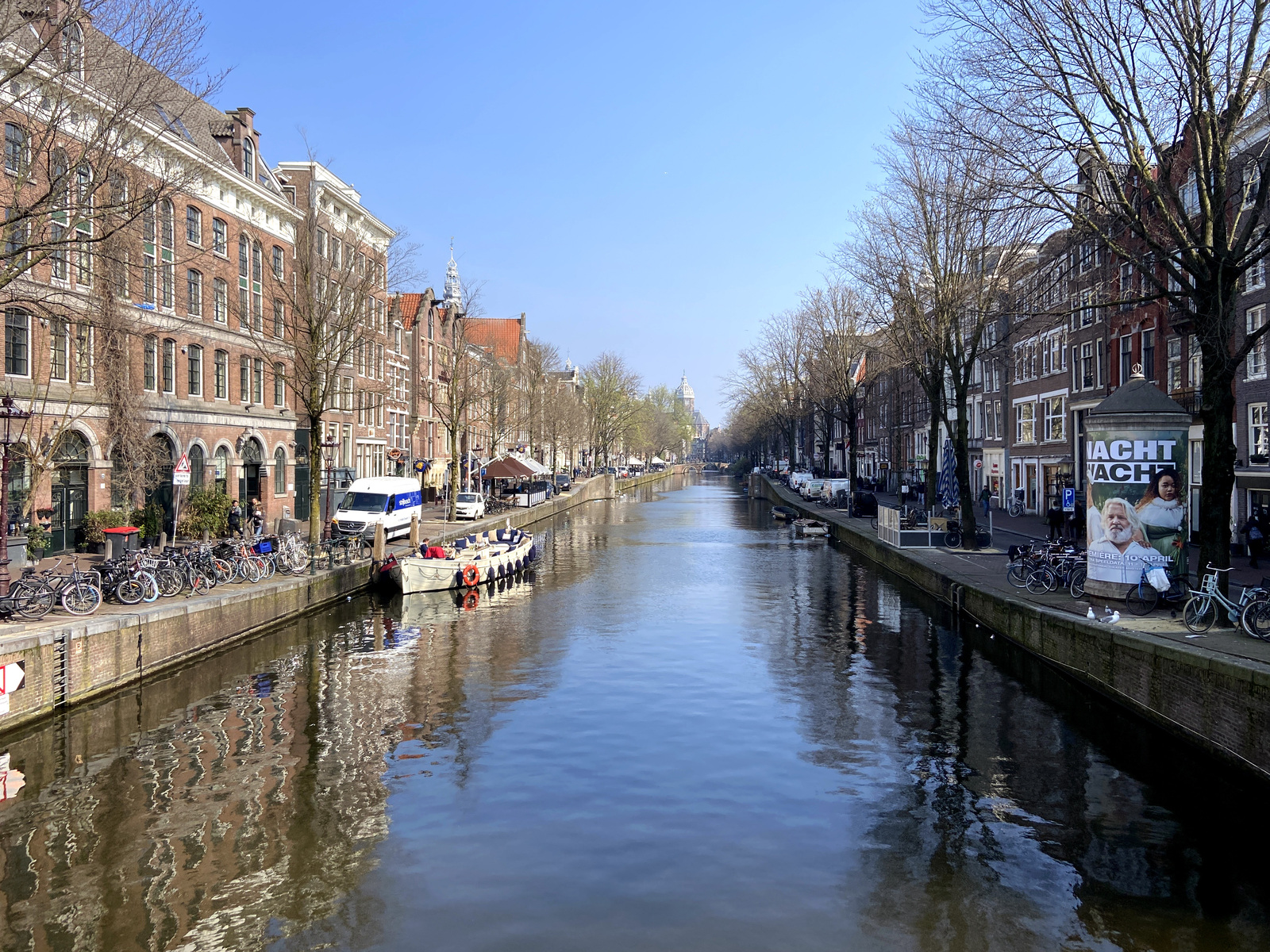

In medieval Amsterdam, the Amstel River divided the city into two sides: the old side (Oudezijde) and the new side (Nieuwezijde). To protect the city, canals were dug along these areas, and defensive embankments – burgwallen – were built. On the old side, the first of these canals was named Oudezijds Voorburgwal, which translates to "Front Defensive Wall of the Old Side." That’s the very canal you’re walking along right now. Why "front"? Because slightly to the east lies its "rear" counterpart – Oudezijds Achterburgwal.
Today, these canals run through the De Wallen district, better known as the Red Light District. In the 14th century, as Amsterdam became an important port, sailors would flock here after long voyages. Their diet, rich in Dutch cheese thanks to its long shelf life, gave them strength and energy – which they were eager to spend on shore. The local ladies, well aware of this, began offering their services while standing in doorways and windows illuminated by red lanterns – and thus, the district got its name.