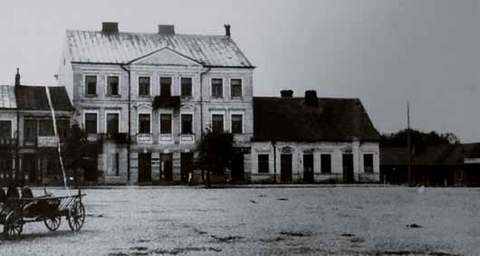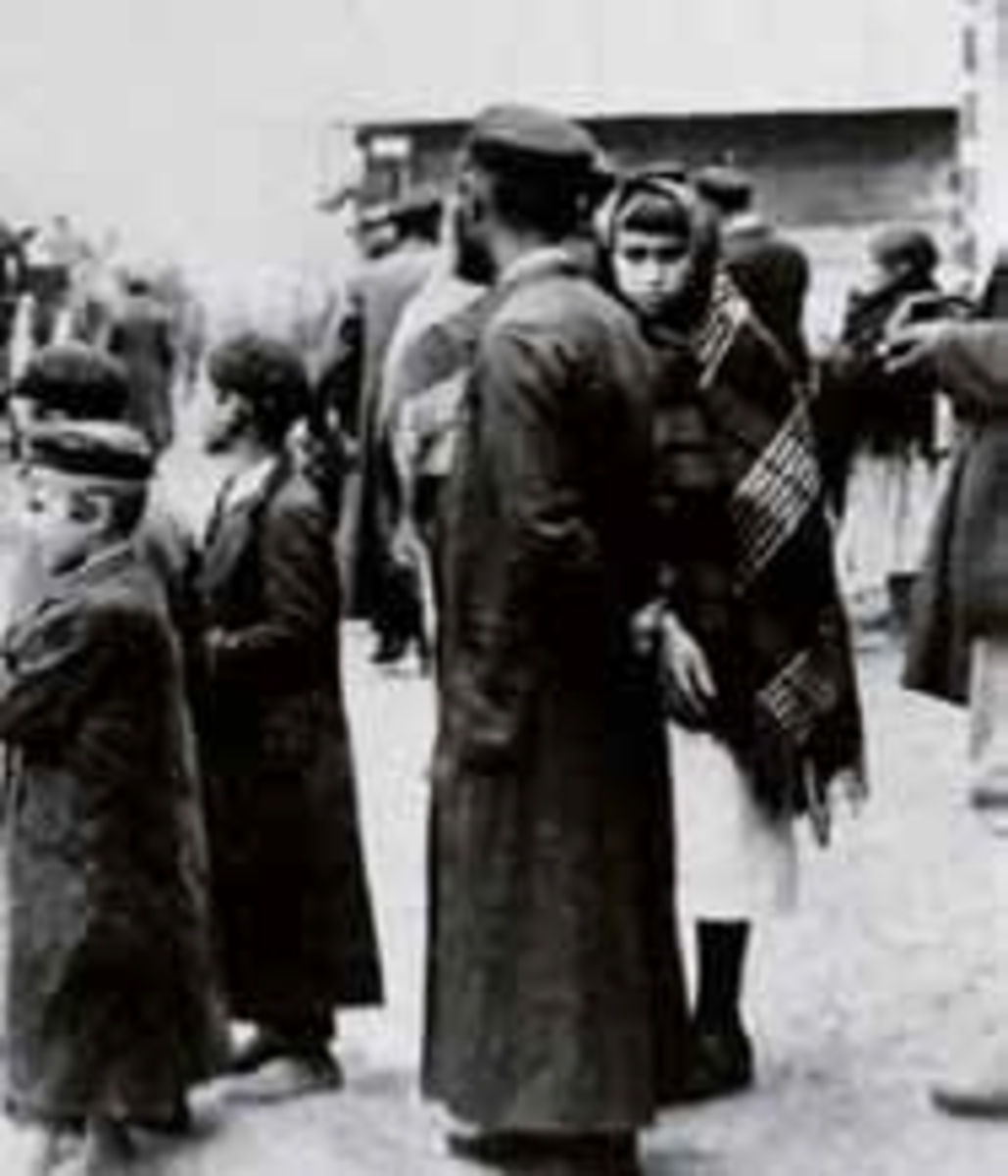

Jews in Parczew - Until 1918. - The first Jews in Parczew appeared in the 15th century. or in the first half of the 16th century.During the vetting of the city in 1661. The Jews of Parczew cited a document from 1541., issued by starosta Jan Tęczynski, regarding taxes on Jewish homes. An official privilege for Jewish settlement in Parczew was issued in 1564. King Sigismund Augustus. According to a lustration conducted in 1565. There were 11 houses owned by Jews in Parczew, including the schoolmaster's house, which may indicate the existence of a synagogue and community here. In documents from 1563. There are references to economic rivalry between Jewish and Christian merchants; as a result, Jews were banned from living in the strict center of Parczew. They were allowed to settle in the suburb north of the market. It was there that the Jewish quarter developed, and there, probably at the end of the 16th century. Or in the first half of the 17th century., and before 1617., a synagogue was built and a cemetery was delineated. In the 16th century. and in the first half of the 17th century.The Jews of Parczew were granted numerous privileges that contributed to the demographic and economic development of the community. In 1633. King Wladyslaw IV renewed the privilege of the Parczew community to use the synagogue and cemetery. In 1654. King John Casimir granted Jews a privilege allowing them to settle and build houses in the city, conduct trade and propinate alcohol for their own use. The source of income for many Jewish families was crafts (shoemaking, baking, pottery).Destruction of the city as a result of the wars of the second half of the 17th century. brought the collapse of the local municipality. After the Northern War (1721), there were only four Jews in Parczew.The Parczew community also included Jews from 29 surrounding towns.In the second half of the 18th century. Jewish community revived. According to inventories from 1770. In addition to numerous Jewish artisan workshops (shoemaking, hat-making, tailoring, boiler-making), there were 18 stores owned by Jewish owners in the city.At the turn of the 18th and 19th centuries. Jews dominated local trade and crafts, and thus contributed to the development of local industry.From the mid-19th century. By the 1930s.Jews made up more than half of the city's population. In the second half of the 19th century. The Hasidic movement gained considerable popularity in the city.
Interwar period - Under the management of the community were a brick main synagogue, a second smaller wooden synagogue (erected after 1923), one or two communal beit ha-midrash, a mikveh, a shelter for the poor and a cemetery. The municipality subsidized the activities of the Society for the Relief of the Sick.There were many private beit ha-midrash and cheders.Most of them were located in the quarter between Bożnicza, Żabia, Brzeska, Koński Rynek, Kościelna, Kolejowa and Warszawska Streets. There were several associations engaged in social and educational activities, including. A branch of the Tarbut Association founded in the second half of the 1920s and influenced by Zionist organizations. Jewish youth were brought together by the Workers' Sports Club "Zar."Representatives of the Jewish community took part in the political life of the city. In 1935. Among the 15 city councilors were five Jews (two Agudah representatives and three - General Zionists). In June 1936. there was an "invasion" of Parczew, organized by Polish nationalists. Jewish homes and stores were then vandalized, and looted property was burned in the market.
After the war - Parczew was home to approx. 200 Jews, mostly repatriates from the Soviet Union, came from Parczew and its environs. February 5, 1946. There was a pogrom, carried out by a unit of partisans of the Freedom and Independence organization from the Wlodawa region (under the command of Edward Taraszkiewicz, alias Zelazny). After an unsuccessful attack on a militia post, partisans looted Jewish stores, vandalized houses and killed three Jews.After these events, most Jews left Parczew.