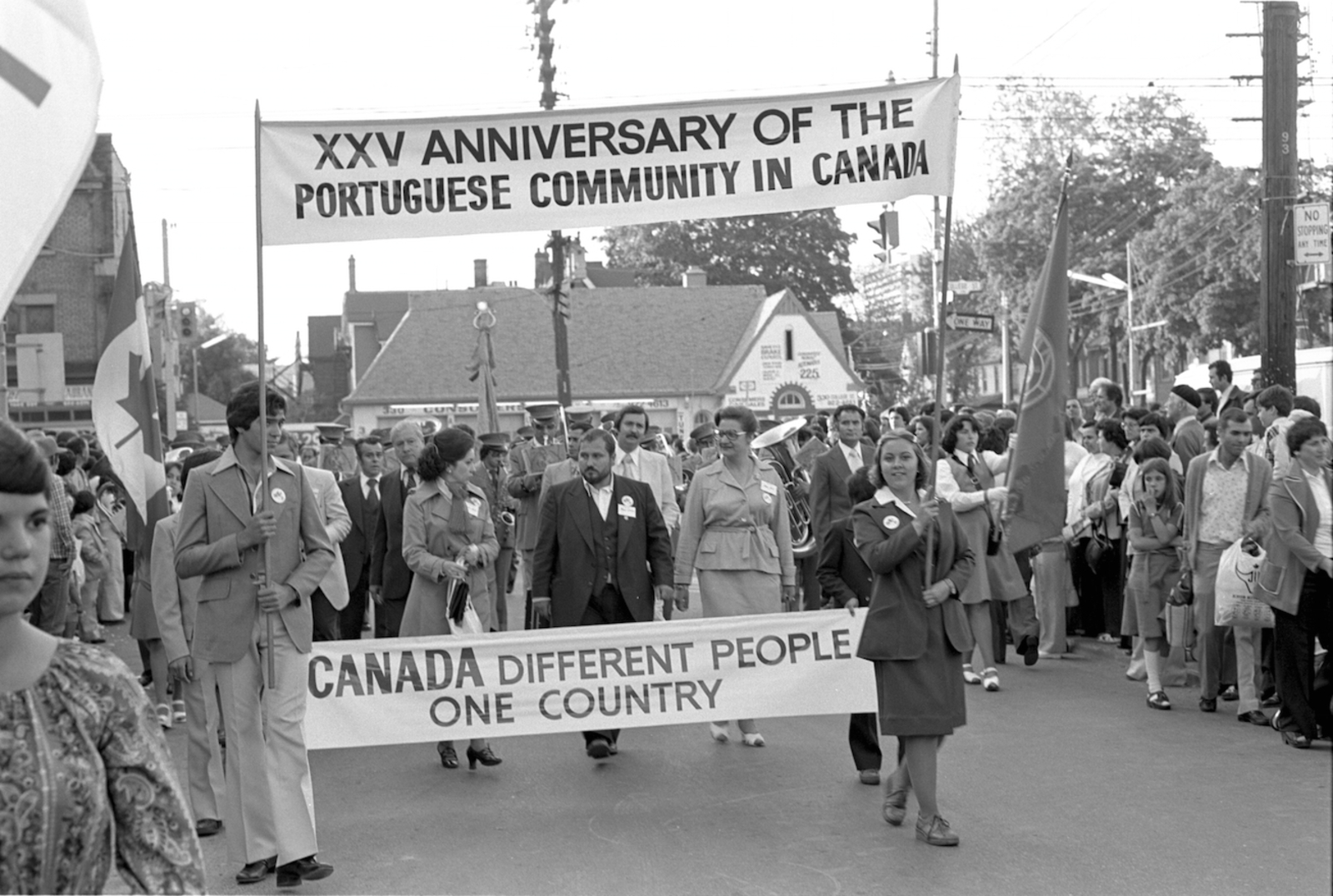

Until 2013, Trinity-Bellwoods Park was the site of the annual Portugal Day celebrations, commemorated every year around June 10th. The parade, which in recent years has marched down Dundas St. West, typically starts at Lansdowne and ends here. These festivities have grown over the years to become the largest celebrations of Portuguese heritage in Canada.
The Portugal Day national holiday was instituted in 1910 to mark the death of the poet Luis Vaz de Camões, author of The Lusiads, an epic poem about Vasco da Gama's trip to India and the feats of Portuguese seafaring explorers in the 15th and 16th centuries. In 1944, the Estado Novo dictatorship renamed the celebration "Day of Camões, Portugal and the Portuguese Race,” which it later turned into a large militaristic propaganda event. In the mid-1960s, the nationalist regime introduced it in the Portuguese emigrant communities around the world.
The first celebrations in Toronto were held in 1966 and were organized by the Catholic priest Alberto Cunha at St. Mary's Catholic Church, who gathered several thousand Portuguese immigrants at the CNE coliseum, today known as Ricoh. In subsequent years, Trinity-Bellwoods became the central site for the festival’s events. At first, the Portugal Day festivities were organized by a small group of community elites with the help of the Portuguese Consul-General. Dignitaries from Portugal and Canada spoke at these events, which included soccer tournaments, Catholic services, and a parade of various community associations. After the 1974 revolution in Portugal there was a fundamental shift in the way the celebrations were organized. Reflecting the democratization process unfolding in the homeland, Portugal Day festivities in Toronto started being organized from the “bottom-up”; no longer just the business of a small privileged group but involving a larger number of community stakeholders. At the same time, the new government in Lisbon renewed efforts to reach out to the expatriate communities after the fall of its colonial empire and renamed the national holiday “Day of Portugal, Camões and the Portuguese Communities” – no longer the “Portuguese Race”.
Since 1986, the Alliance of Portuguese Clubs and Associations of Ontario (ACAPO) has organized Toronto's program of festivities. That year also saw Queen's Park recognize June 10 as Portugal Day in the province. Since 2001, the month of June has been designated by the Ontario government as Portuguese History and Heritage Month.
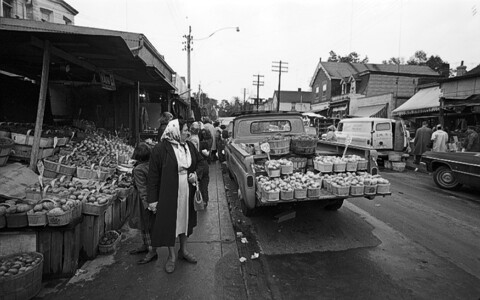
In the late 1980s, Dundas St. West and Ossington Ave. became the new heart of Toronto's Portuguese community. Over the past decade, this neighbourhood has quickly gentrified, as trendy cafés, bars, galleries and other boutique shops catering to young Canadian urbanites gradually replaced the old Portuguese businesses. However, there is still a significant Portuguese presence in the neighbourhood, easily identifiable by the ubiquitous Portuguese rooster (or Galo de Barcelos), by the Portuguese Football Federation logo, and by the many flags that come out during international soccer competitions. Dundas St. West and Trinity-Bellwoods continue to be one of the main thoroughfares of Portuguese soccer fans celebrating their homeland national team's victories. While Portuguese immigrants have continued to move in block to other parts of the city, Little Portugal remains an important site of social gathering and shopping for this community, including for those who moved to suburbs and still visit Toronto’s West end on the weekends.
If you wish to learn more about the topics discussed in this audio tour or about other public history and digital humanities initiatives produced by the Portuguese Canadian History Project, please visit our website at https://pchpblog.wordpress.com or follow us on Twitter @PCHP_PHLC
Thank you for listening to this audio tour. I hope you enjoyed it. Até à próxima.
Music "Canção da Ribeira" (2012) by Alexandre Bateiras.