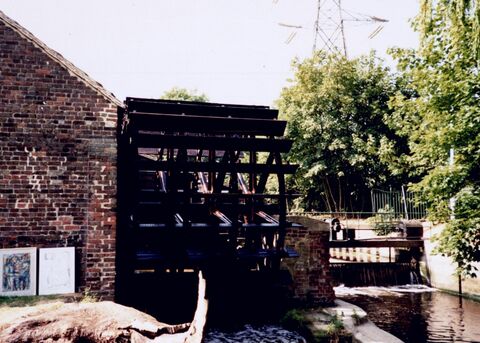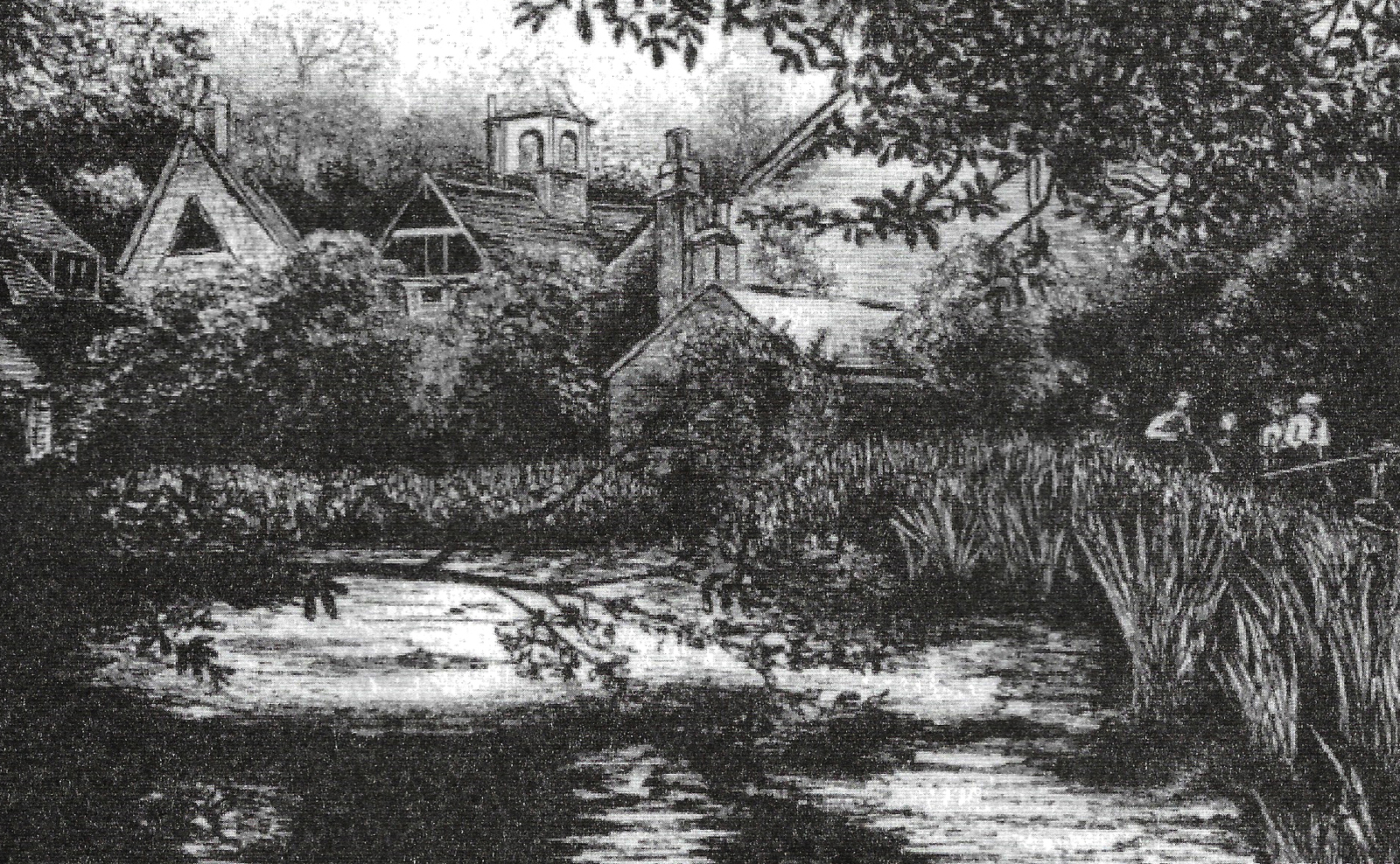

These works were located at the northern end of what is now Ravensbury Park. The earliest recording of a works here was in sixteen ninety when a Whitster William Wood was in bleaching cloth. The works greatly developed when Peter Mauvillain took over in seventeen sixteen. Mauvillain senior, working with his brother Stephen, was one of the most successful Huguenot refugees in the calico printing trade who had established themselves in the Wandle Valley.
The Mauvillain brothers were successful and well respected. In sixteen ninety six they were signatories on a petition presented to the House of Lords opposing a pending Bill (part of the Calico Acts) which aimed to enforce restrictions on the use of printed calico. They were signatories on further petitions to Parliament in seventeen fourteen, pleading for excise duty on re-used linen and calico to be lifted, and again in seventeen nineteen opposing the final proposed Bill of the Calico Acts, which forbad the use of all printed calicoes.
By seventeen nineteen it is noted that Peter was employing two hundred and five people at both Ravensbury Print Works and Wandsworth. It is also noted that they had land at Morden and Merton. They were ahead of their time with the size of their premises and the diversity of the skills of their workforce - with workers that included tierers, printers and cutters, they had aspects of factory working that would only be seen late in the 18th Century as part of the industrial revolution.
Peter died in seventeen forty, with Stephen soon after. Their estate was left to Peter Mauvillain junior, Stephen’s young son. Peter ran the business until his death in seventeen fifty five, after which the print works were passed on to various extended members and relations of the Mauvillain family, but none were quite as successful and pioneering as Peter Mauvillain senior.
In seventeen fifty five John Arbuthnot took over the Ravensbury Print Works. The works he took over were described as “a most extensive manufactory”. In addition to the works he was leased various outbuildings, fields and pasture by Sir Nicholas Carew, lord of the manor.
Arbuthnot formed a link with the Foundling Hospital, founded in 1741 by the philanthropic sea captain Thomas Coram. It was a children's home established for the "education and maintenance of exposed and deserted young children." During the seventeen sixties several groups of children were successfully bound to manufactories with good retention intentions.
In its last years the works were in the ownership of the Hatfeild family from the Morden Hall Estate. The buildings were finally demolished, having been damaged during the second world war, when Mitcham Borough Council took over the site.