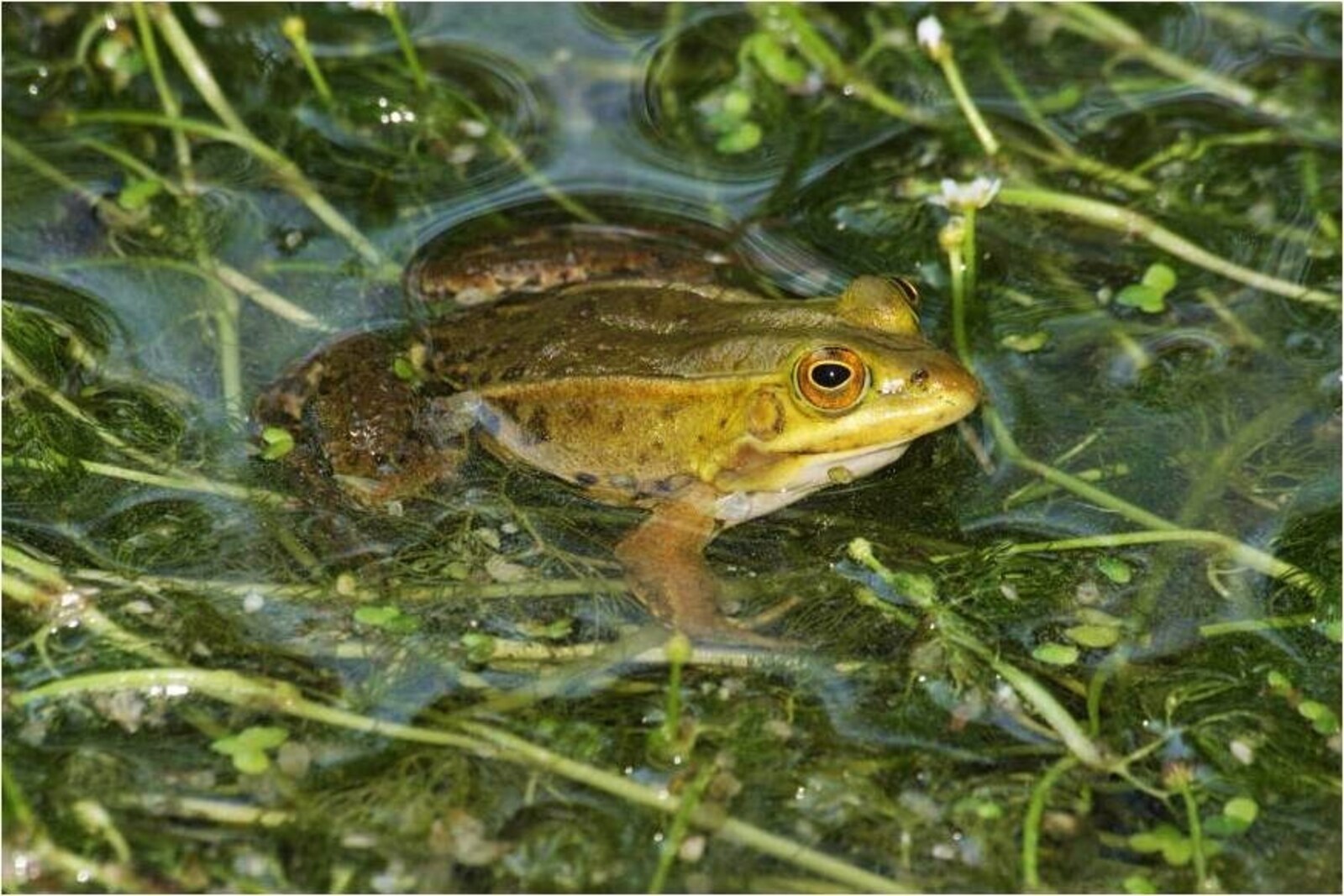
The Po Delta is a kingdom of reptiles. In spring, during the reproductive period, we can hear the song of the Green Toad, similar to the trilling of crickets; the Italian Tree Frog, which is very common in flat lands, and the Common Water Frog, now diminishing in number as fresh water swamps disappear.
Amphibians are an important indicator of the quality of the environment. They are intimately connected to fresh water habitats, and their subtle epidermis is extremely sensitive to water pollution. Among the amphibians, toads are those that can resist longest away from water, whereas frogs and newts need constant hydration. Among tailed amphibians we might mention the Smooth Newt and the Italian Crested Newt. Of the tailless variety, we should mention the now protected Italian Agile Frog, which is at risk of extinction. But the real jewel in the crown is the Common Spade-foot, one of the rarest amphibians in Europe.
The humid zones are equally ideal for a number of reptiles, for example the European Pond Turtle. This species is now rare in Europe, but can be found where there is plenty water and swamp vegetation, since it eats a lot of invertebrates and small fish. In the more arid parts of the Coastal Botanic Garden at Porto Caleri and the fossil dunes, we find the Hermann’s Tortoise, which was probably introduced by humans and, among snakes, the black Green Whip Snake, the arboreal Aesculapius Snake, the Grass Snake, largely found in humid environments, the Dice Snake, which emits a foul-smelling substance when in danger, and the extremely rare European Asp.