San Raimundo de Fitero, historical figure of Castilla of the 12th century, founding abbot of the first Cistercian monastery on the Iberian Peninsula and founder of the military order of Calatrava. Still today, different places dispute the honor of having hosted the birth of such an illustrious personage. Two cities are struggling to get their cradle, the Aragonese Tarazona and the French Saint Gaudens de Cominges. The first historical data about his life begin in the year 1141, when he was proclaimed abbot of the first Cistercian monastery of the Iberian Peninsula, after arriving with the monks of that order around the year 1140 and descend to the plain to Niencebas, before occupying its definitive headquarters in Fitero. During its mandate, the monastery consolidated an abundant and rich patrimony, because, during ten years, the real and particular donations, the privileges and the acquisitions happened, that culminated with the ecclesiastical protection of the monastery. In 1156, along with the purchase of new properties, the company of Calatrava arose, a place that was obtained by Abbot Raimundo in 1158 by donation.
With the death of the king of Castile Alfonso VII, in 1158, Raymond went to Toledo for the new king, Sancho III, to confirm the privileges that his father had granted the monastery. During his visit he learned of the news that an offensive was being prepared by the Muslims, and that the king needed help to defend the square of Calatrava. The Templars, unable to face the Saracens, yielded the defense of the fortress to Sancho III, who, according to Archbishop Rodrigo Ximénez de Rada, announced that Calatrava would give it to defend it and, being present, Abbot Raimundo requested the fortress . Actually, it must have happened that Sancho III summoned the Christian princes to tell them about the war in Almazan. Such news had to arrive to the abbot of Fitero, who went to Almazán obtaining the donation of the town of Calatrava.
After being granted the defense, in a short time he organized an important army that dissuaded the Muslims from attacking the square. There, Raimundo, led a community composed of monks from Fitero and knights employed in military defense activities. The order was of mixed life, reason why the abbot dictated the rule of San Benito for the horsemen. Papal approval for the Order of Calatrava did not arrive until 1164, when Alexander III received it under his protection. However, Abbot Raymond had died in Ciruelos a year earlier. In 1471 his remains were moved to the Cistercian monastery of Monte León de Toledo and since the nineteenth century, the relics of the saint are in the cathedral of Toledo.
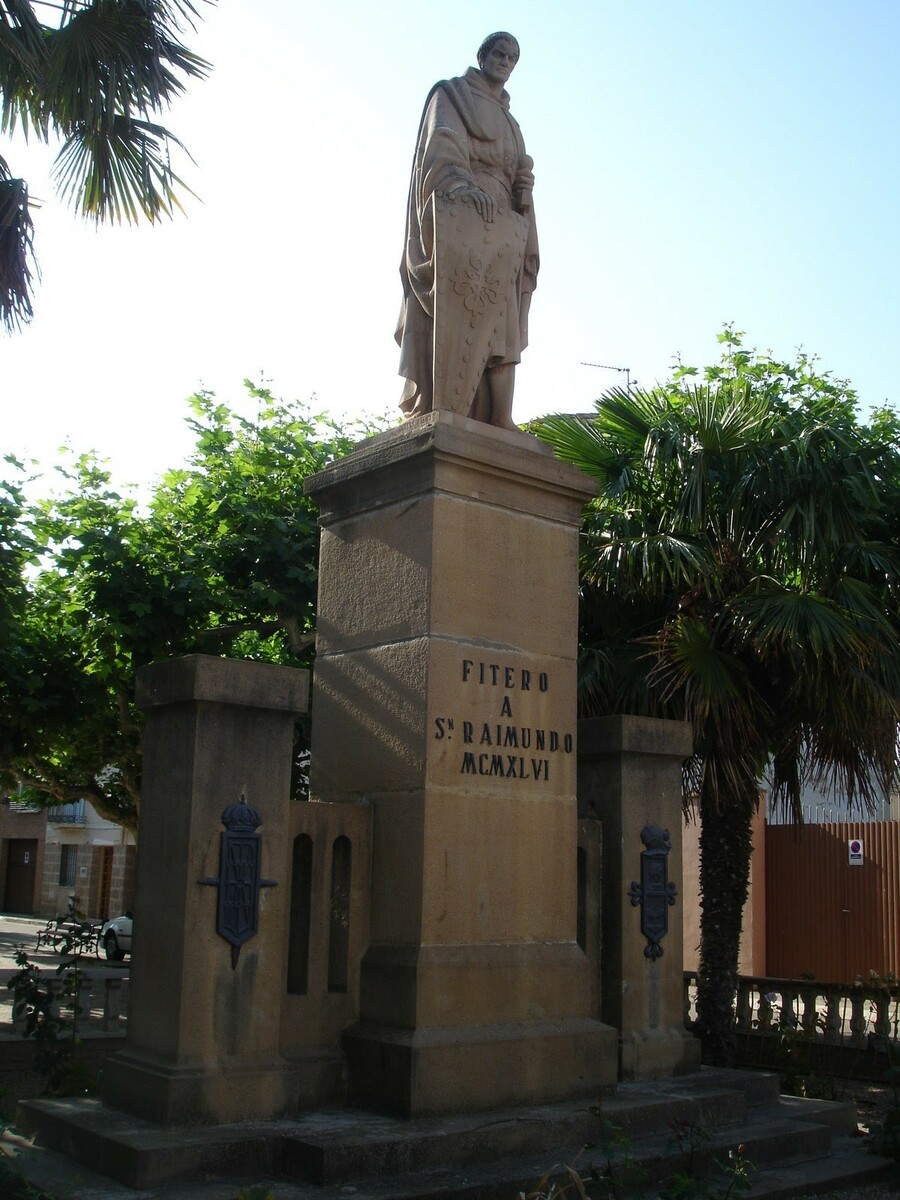

Click to see all 4 Photos
Story 7 years ago
Saint Raimundo de Fitero
Fitero
en
Overview
Reviews 0
Reviews
0.0
0 comments
Provided by
Fitero
Bienvenido a Fitero.
This story belongs to
0.0