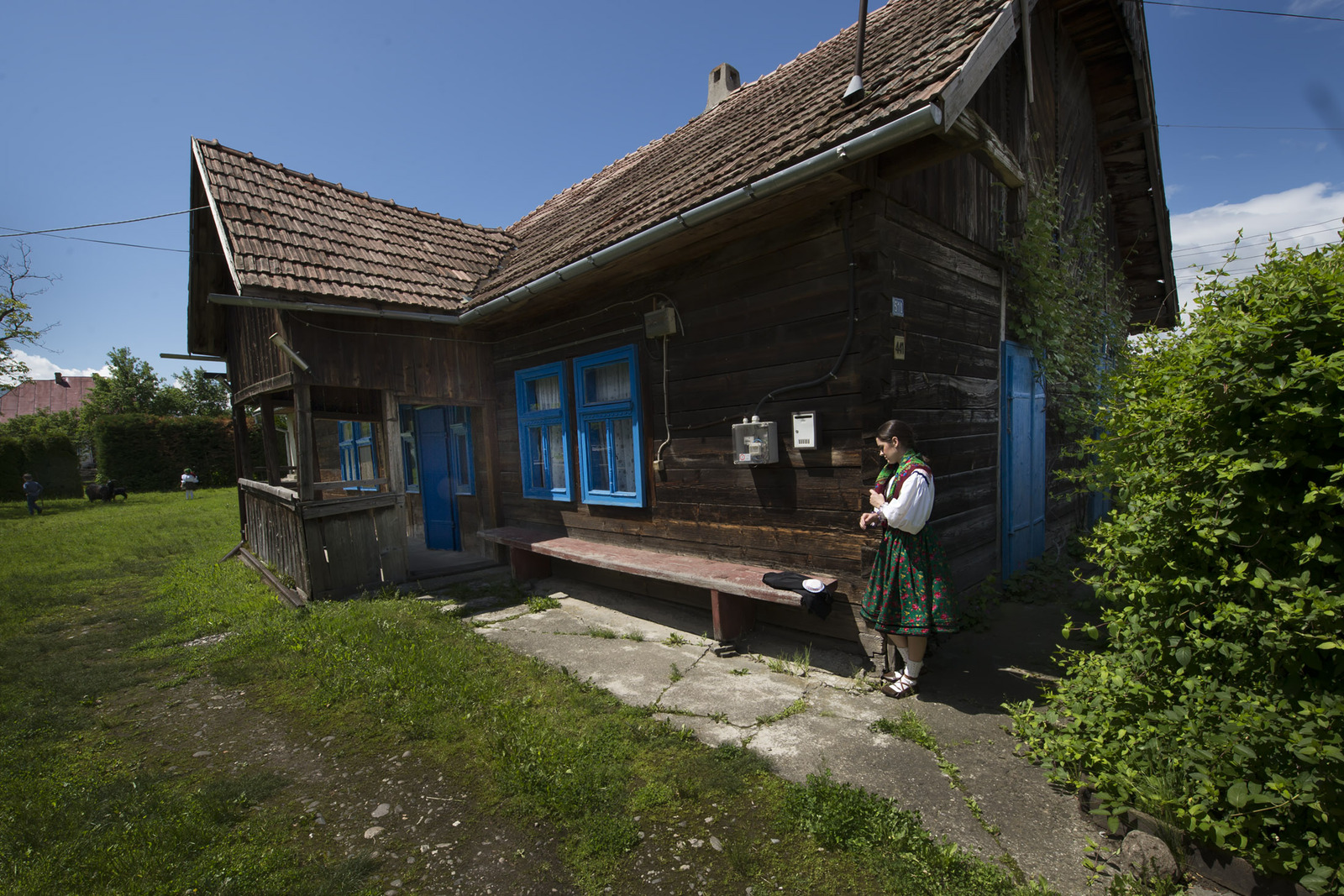

Even if there is no document to attest the arrival of the first Jews in Săpânța the approximate time of their arrival is considered to be the beginning of the 18th century. Most of them made their living from distilling, agriculture, shopkeeping and forestry. Around 1800 the first synagogue was completed and the congregation became independent becoming the seat of the court, with a separate mikveh and Beis Midrash, under the exercise and influence of one of the most famous rabbis of the area-Rabbi Joseph Meir Weiss. It is certain that at the beginning of the twentieth century there were almost 1000 Jews living in Săpânța. The collective memory of the locals portrayed their arrival: the came in a caravan nearby the village, up to a place beside the Tisa River. It was summer and they had negotiated with the villagers to buy land inside the village in order to build houses. So, they bought land, built houses and they moved in the village. And they stayed. Joseph Meir Weiss (1838–1909), was a Tzadik, founder of the Spinka Hasidic dynasty. Many legends and remarkable stories circulated about him. Weiss was called a "miracle worker" and attracted thousands of followers. He was also known for his self-mortification and ecstatic prayers. He prayed during festivals with the words from Musaf Amidah: “Bring together our scattered ones from among the nations and gather our dispersed from the uttermost parts of the earth. Lead us in triumph unto Zion thy City, and unto Jerusalem, and only then they will serve You with a perfect heart." The works of Joseph Meir Weiss are Imrei Yosef, a commentary on the Pentateuch in four volumes, sermons on the festivals and their customs, and an anthology of Hassidic teachings. Weiss died in 1909 and in 1972, his remains were reinterred in Petah Tikva, Israel.
