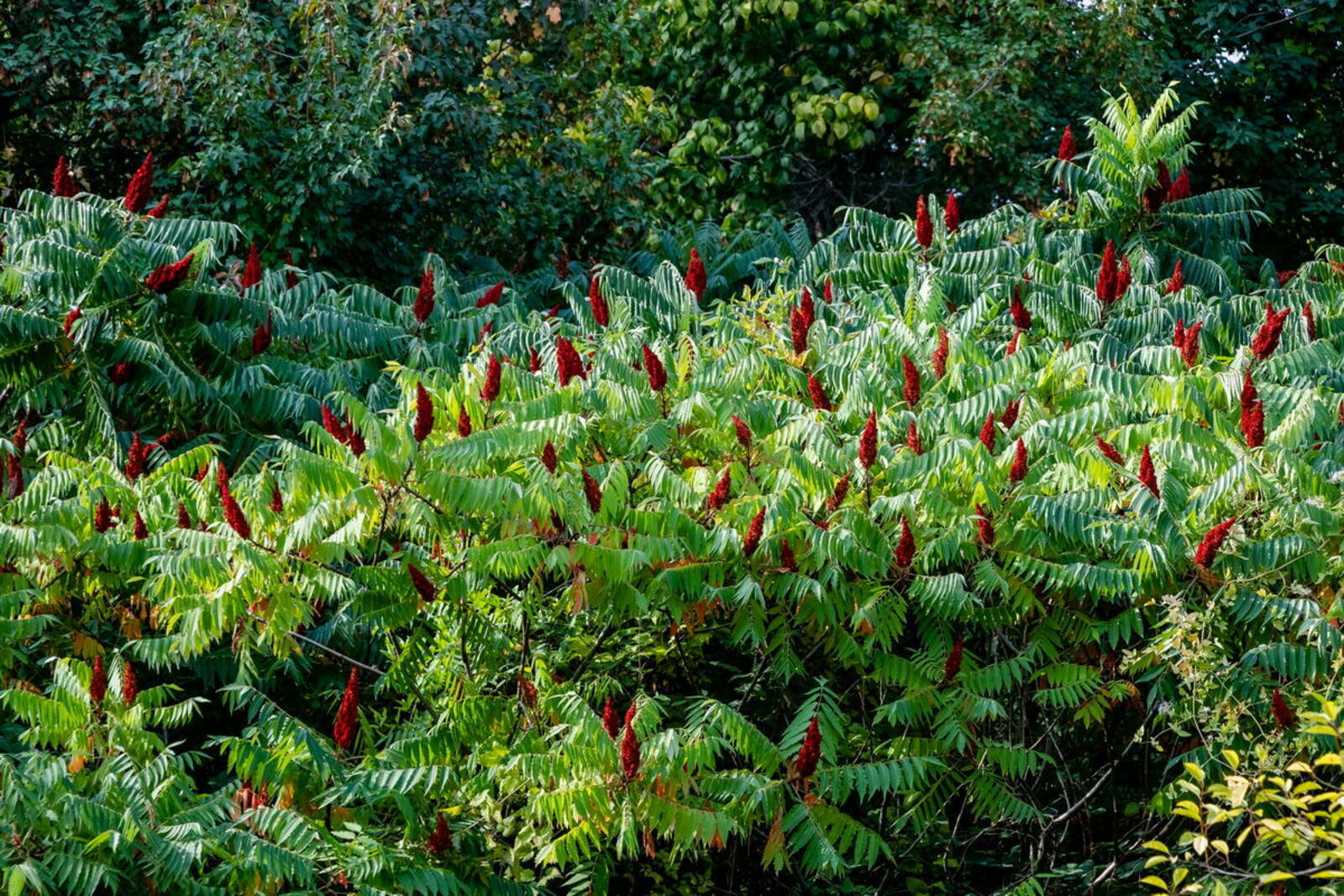


Sicilian sumac Rhus coriaria L.
Other names: tanner's sumac, elm-leaved sumac
Sicilian sumac is a small tree or shrub. In the wild of Central Asia, it grows in the Kopet Dag and Western Pamir-Alai mountains on dry rocky slopes, amid rocks and in sparse forests. This is a light-loving and strongly drought-resistant plant.
Thickets of the Sicilian sumac can be found to the right of the path deep inside the garden.
The leaves are compound, composed of rough and fluffy leaflets. The flowers are greenish-white, diclinous, with male ones with stamens and female flowers with pistils placed in different panicles.
The red fruits in panicles are visible from a distance and resemble flames. Oil obtained from the Sicilian sumac seeds can be used to make candles.
The leaves, young branches and trunk bark are rich in tannins, for which this species has been given one of its names. Different parts of the plant can be used to produce various dyes – yellow, red, brown, and black.
Various organic acids, such as malic, citric and others, endow the fruits with a sour, astringent taste. Dried and powdered, the fruits are used as a spice for meat and fish dishes, especially kebabs.