

The Russian state was loyal the matters of faith. But the issues of the land ownership were in full state control, and with the change of the dominion, land tenure laws were also changing. The economic prosperity of Pyhäjärvi has begun in 1716, when Peter I doled out the lands regained from Sweden to his associates. The first owner of the donated lands around Pyhäjärvi was the Commissary-General Prince Yakov Fedorovich Dolgorukov, who had no heirs, and therefore, following his death in 1720, the lands were returned to the Russian treasury. In 1721 these lands were given to the privy councilor Count Andrei Artamonovich Matveyev, who for 16 years, until 1715, was Tsar Peter I's representative abroad. Matveyev possessed one of the best private libraries in Russia and became known as one of the first Russian memoirists, and the author of notes about the court of Louis XIV. After Andrey Matveev's death, the granted estate passed to his son Fyodor. And after his death in 1734, the lands were transferred into possession of the chamberlain, General-Field Marshal Count Pyotr Semyonovich Saltykov, whose name is associated with the highest military success of the Russian army in the Seven Years' War. Upon Saltykov's death, the Priozersk estate vested to his widow. After her, the estate passed into the ownership of Countess Chernysheva, a famous socialite of Catherine II's time. In 1774 Chernysheva sold the estate for 25,000 rubles to the court banker of Catherine II, Johann (or as he was called in Russia - Ivan Yuryevich) Fredericks, whose descendants owned this lands for the next 150 years.
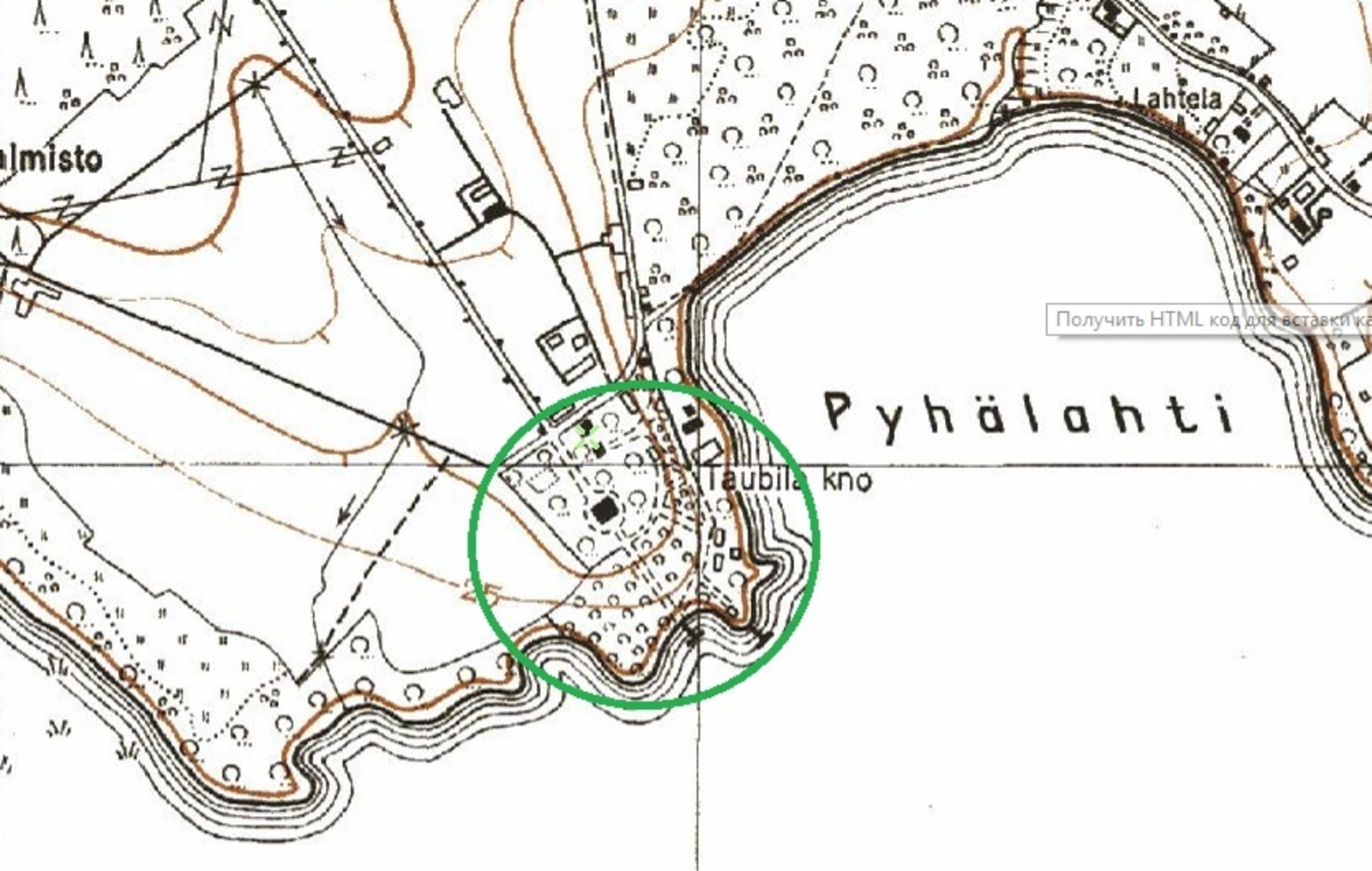
It was Ivan Fredericks who named the estate Taubila. In 1836 the manor house was built on the beak of Pyhälahti Bay in the northwestern part of Lake Pyhäjärvi and the family lived in it until 1905. It was a classical style building with mezzanine, equipped with nine tiled masonry stoves. Around the manor house there were several outbuildings: a granary, a cowshed, a pigsty, stables and an oil mill. Innovative farming techniques were used at the Taubila farms. The manor brought high income and was a supplier of dairy and meat products to the Imperial Court of Russia. The last of the Russian subject who owned the Taubila was Vladimir Borisovich Frederiks, the last Minister of the Imperial Court, who on March 2, 1917 in Pskov signed the Act of Abdication of Tsar Nicholas II. In 1918, Frederiks sold the Taubila estate with all surrounding lands for 6.8 million Finnish marks to the famous Finnish businessman and confectioner Karl Fazer. Fazer was a zealous owner of the Taubila, but we are more interested in his environmental activities. Fazer was a great marksman who competed in the 1912 Olympics and an avid hunter and birdwatcher. On his Taubila farm, he bred rare species of birds. On his own costs he established and maintained a bird sanctuary in the Åland Islands and a pheasant preserve in Helsinki outskirts. And offspring of those pheasants still live in the city. Fazer's love of birds is also evident in his confectionery business. In the family of the last Russian Tsar Nicholas II, jeweled Faberge eggs and Fazer Mignon chocolate eggs were an essential part of the Easter celebrations. It’s interesting, that of 24 goldsmiths and jewelers working for Faberge, 14 were born in Finland. To this day, Fazer Company uses real egg shells to make Mignon eggs. The production technology has not changed since 1896, when Karl Fazer first introduced chocolate Easter egg. White and yolk are carefully removed from the egg shell through a small hole, the empty shell is filled with almond-hazelnut nougat, and the remaining hole is sealed with sugar glaze. Each egg is then decorated with a blue sticker of Fazer's golden signature. Though Karl Fazer loved the Taubila Manor and enjoyed his time here, he has sold it in 1929 to the state. The manor house has not survived to this day, only granite steps remain from it. The estate was burnt down during World War II (according to some sources, in 1941, or in 1943-44 by others). Until now only the building of the manor granary, the steps of the manor house and the remains of a granite pier has survived.