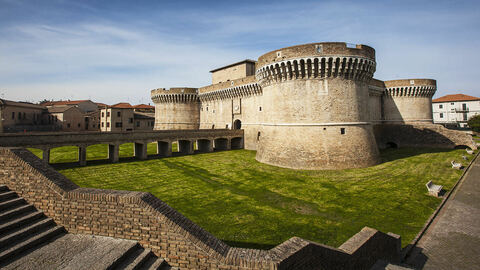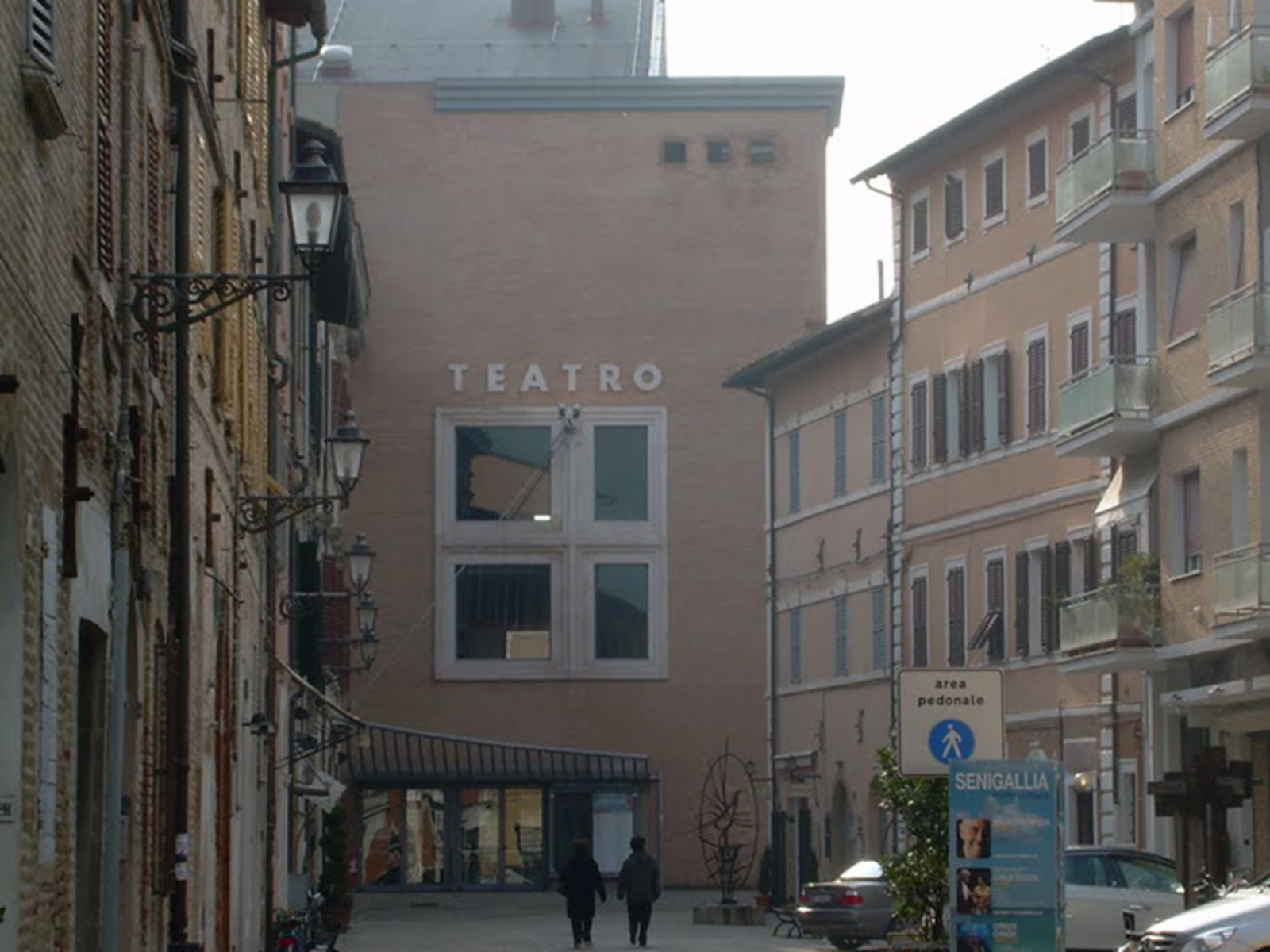

In the 19th century the theater of Senigallia was one of the most important smaller squares of Italy.
This was possible thanks to the project of expansion of the lyric season of the town administration to obviate to the decline of the Fiera della Maddalena (Magdalene’s Trade Fair) and to summon people in town. The Teatro Condominiale (private residents theater) was purchased built in the previous century by the old city aristocracy in a building deprived inside the baluard of St. Martin and in 1830 the new Teatro Comunale was inaugurated, planned by the architect Pietro Ghinelli.
In a happy symbiosis, the theater of Senigallia and the fair sustained each other. To demonstrate the success of the lyric season, the city recorded the everything exhausted in renting of 1837, despite the fair had been suspended for suspicion of cholera.
In 1839 the building was tragically destroyed in a fire, but the City Council decided on the immediate reconstruction.
The new theater was called "La Fenice", as tradition wants for theaters destroyed by the flames.
In 1843 he hosted “I Lombardi alla prima crociata ”, just a few months after his debut at La Scala in Milan, concerted by Giuseppe Verdi himself, making Senigallia the only town in the Marche where the presence of the famous composer is documented. Later we remind the presence in Senigallia of Pietro Mascagni who directed his memorable '”Iris” in July 1904 .
The activity of the theater continued until the earthquake of 1930 and a bomb of the Second World War that made the building not in safety.
In the years ‘90 it was opted for the construction of a multifunctional structure. During the works an entire archaeological site was brought to light that forced a revision of the project: the structure was, therefore, conceived as a gigantic palafitta. In this way today we have the possibility to walk freely in the archaeological area between the Roman streets at 4.2 meters below the road level.