The Castello del Carmine, also called Sperone due to its shape, was located on the sea, in the area between Via Nuova Marina and Corso Garibaldi.
It was built in 1382 at the behest of Charles III of Durazzo, the Angevin ruler of the time, who needed a defensive bulwark, both marine and terrestrial, in the south-eastern area of the city.
The original project included two large cylindrical towers, a larger tower and crenellated walls reinforced by large blocks of piperno. Furthermore, being intended for military use only, it was devoid of embellishments, frescoes, tapestries, halls and royal apartments, it was mostly a fortress. After enduring the battle between Louis II of Anjou and Ladislao di Durazzo in 1368 and the siege of Alfonso of Aragon in 1484, Ferdinand I decided to make some changes, entrusting the work to the engineer Francesco Spinelli, who concentrated above all on the expansion of the walls. Subsequently, in 1512, following a flood, the main tower was damaged and was rebuilt with a square base. Other restorations were carried out in 1662 to update the structure to the new war requirements and to restore the interiors, even embellishing them.
During its history, the castle was the scene of some events that marked the past of the city, such as between 1647 and 1648, during the revolt of Masaniello, when the Royal Neapolitan Republic was proclaimed there and was chosen as a residence by Gennaro Annese. , became a point of reference for the insurgents after the death of Masaniello himself, or, as in 1707, when the Neapolitan nobles tried to take power by devising the "Macchia conspiracy". But despite its importance, it was not spared its demolition in 1906 to allow the construction of the last stretch of Corso Garibaldi. The Sani Barracks was built in its place, which was then resized in turn in the 80s of the twentieth century.
Today, two towers and a part of the walls along via Nuova Marina remain visible of the structure.
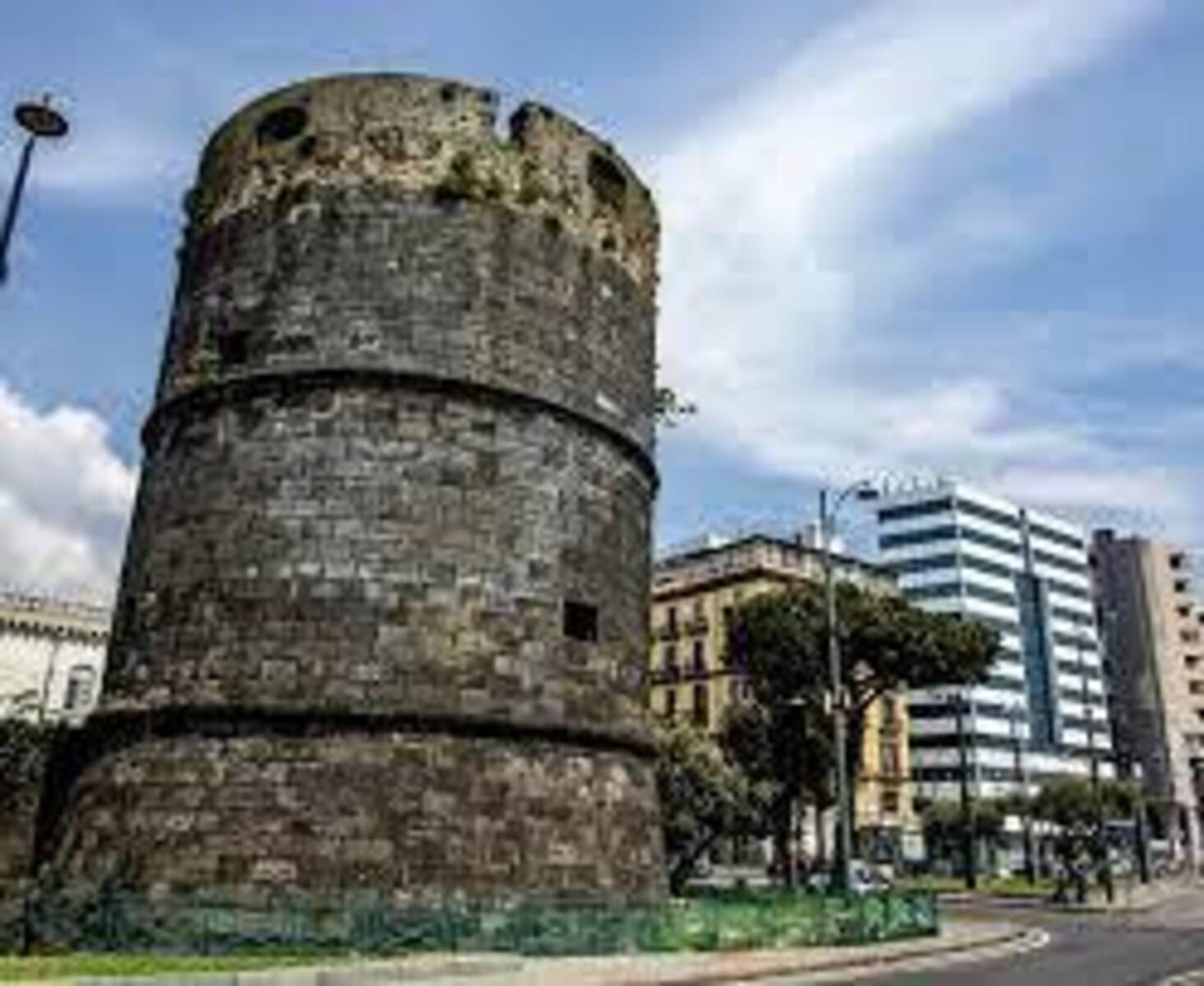

Click to see all 4 Photos
Story 5 years ago
the castello del carmine
LC
Liceo Classico Vittorio Emanuele Garibaldi
en
Overview
Reviews 0
Reviews
0.0
0 comments
Provided by
LC