

War memory Haslemoen
For many, Våler has a somewhat unknown, but very exciting role from World War II. Because when Germany, in April 1940, occupied Norway, the state had already bought 5,700 acres in Våler and there were major Norwegian plans for a camp for the army's air defense, with its own new airport.
But when the occupation was a fact, the Quisling government started building a camp for Labor at Haslemoen. It was completed in 1943, but the Germans had seen the plans for a major airport.
The Wehrmacht saw tactical advantages in the Norwegian plans. The airport would be located in the middle of the country with a distance that made it difficult for Allied airstrikes. Furthermore, long-range bombers could operate on Allied targets in the North Sea. The location against attacks to the east was also favorable and in January 1944 work began.
The work was to be carried out by the German organization Todt. The workforce was 400 German and Norwegian workers and about 1,000 Russian prisoners of war. By the time they finished in August 1944, they had already built up the entire airport, train connections and four different camps. The area was about 6000 acres which included an airstrip of 1800 meters and 4.5 kilometers with runways and associated air parking pockets.
After the war, the Norwegian Armed Forces reused parts of the German installations. The airstrip itself was rarely used, although the Air Force, until the early 1990s, had a department with observation aircraft, the so-called Haslemo crow, located at Haslemoen. When the tenant was closed down, Forsvarsbygg sold the entire area to Våler municipality.
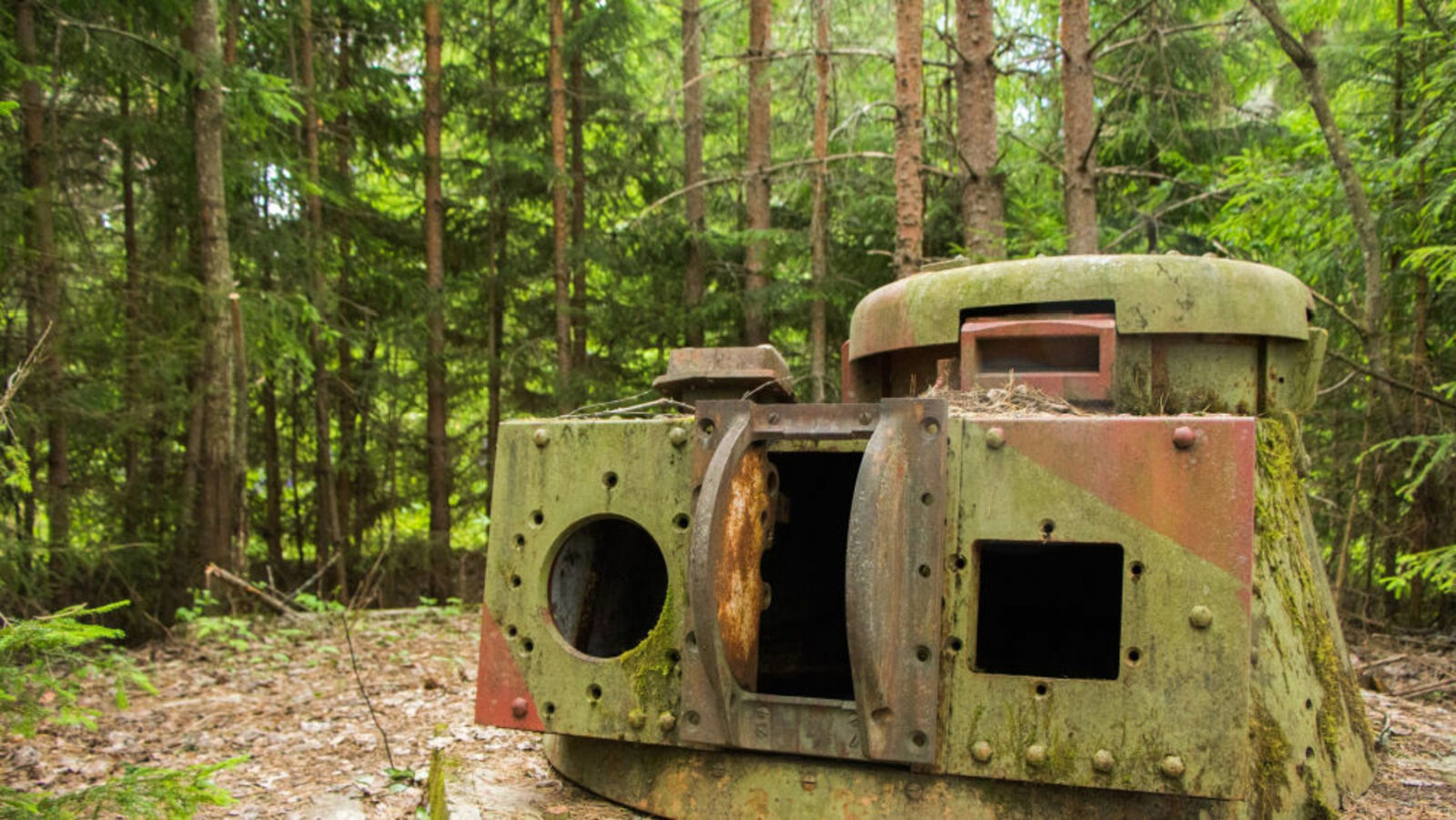
This whole area today constitutes a military-historical cultural landscape, and many traces are still relatively intact. Such as machine-gun positions, bunkers, impressive foundations, and not least the road structure and airstrip, with both a runway, taxiway and a preserved hangar floor.
Volunteers have so far taken care of the story and documented it on their own website. There is no doubt that the war-historical monuments in the Haslemoen area are important cultural monuments and can live on through active cultural communication.